
The Asparagus Pixie – Giant Healing-Style IP Landmark Sculpture
IP Sculpture
-
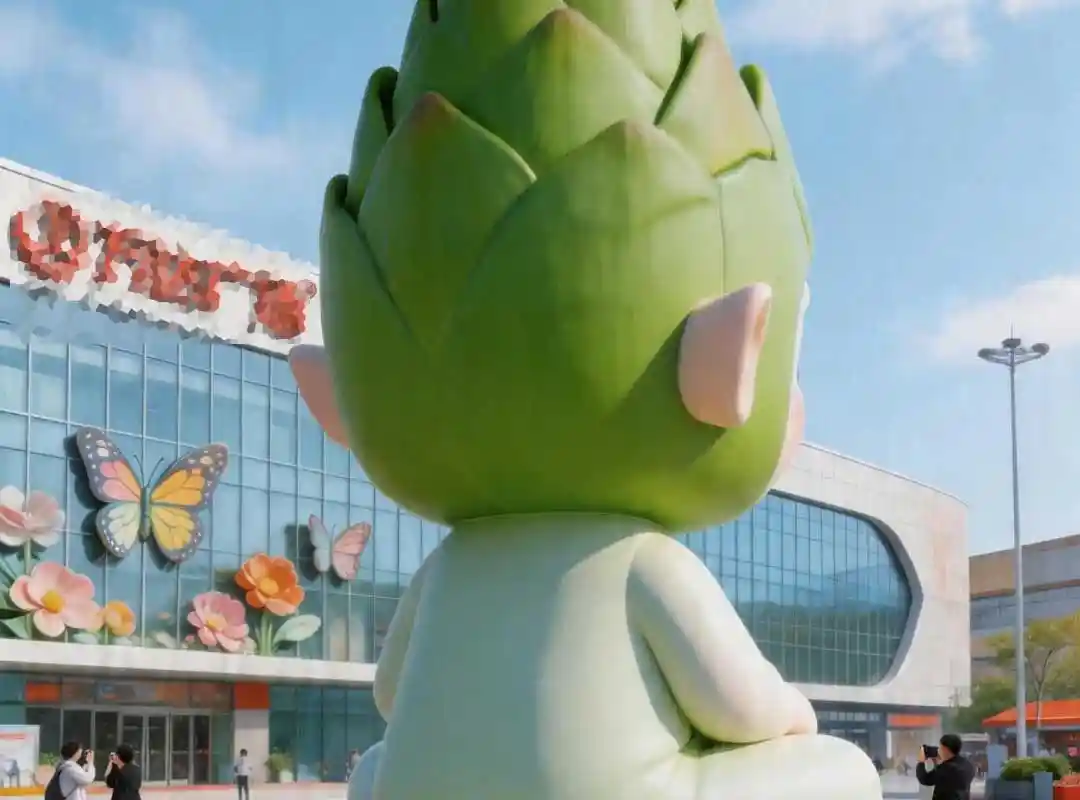
To inject a vibrant, youthful, and healing atmosphere into the commercial district, this project introduces a giant IP art installation featuring a soft and adorable “Asparagus Pixie” in a cross-legged sitting posture. The sculpture is meticulously crafted using 1:1 3D modeling, capturing the intricate overlapping curves of the asparagus headwear and the gentle gradient of fresh green tones. Built with premium fiberglass and an all-weather matte finish, it combines artistic expression with commercial durability. Designed specifically as a social-media-friendly landmark, this giant installation aims to maximize foot traffic, engage young consumer demographics, and become the ultimate viral photo-spot for the shopping center.
Project Timeline
-
Total Duration: 6 Weeks
-
Phase 1: 3D Modeling & Digital Approval (Week 1) – 1:1 digital replication and structural optimization.
-
Phase 2: Foam Prototyping & Detail Refining (Week 2) – Manual sculpting and adjustment of the headwear layers and facial expressions.
-
Phase 3: Molding & Fiberglass Casting (Week 3–4) – One-piece fiberglass molding and reinforcement.
-
Phase 4: Bas-Relief Texturing & Matte Painting (Week 5) – 3D embossing, gradient airbrushing, and UV/scratch-resistant coating application.
-
Phase 5: Logistics, On-Site Installation & Launch (Week 6) – Transport, secure plaza anchoring, and final unveiling.
-
Project Budget
-
Total Budget: $35,000 USD (Estimated)
-
Includes: 3D modeling, foam sculpting, fiberglass fabrication, premium weather-resistant matte baking paint, UV-protection coating, internal steel structural reinforcement, packaging, and logistics.
-
Sculpture Dimensions
-
Height: 157.5 inches (~4 meters)
-
Width: 118.1 inches (~3 meters)
-
Depth: 118.1 inches (~3 meters)
-
Note: Designed at a giant scale to ensure maximum visual impact in open commercial squares while maintaining a friendly, approachable proportion for pedestrian photography.
Engineering a Seated Figure at Four Metres
A cross-legged sitting pose is more forgiving than it looks at this scale, because the crossed legs create a wide, low footprint and the load path down from the torso is short. The main structural work goes into the lap and the knee joints: those are where the shell wants to open up, and they are also where visitors will lean or sit, so the laminate is thickened locally and the internal frame is brought up into the knees rather than stopping at the hips.
The arms rest on the knees in this pose, which means the hands are supported at both ends and can therefore be hollow without risk. At four metres the head is far above eye level, so the underside of the chin and the top of the head are the surfaces seen most often — both need the same finish quality as the face, which is a common oversight on tall seated figures.
Surface Treatment for a Soft Read
The brief asked for soft and healing, and on a large figure that is a finish decision more than a sculpting one. Softness comes from rounding every transition and avoiding any hard specular edge, so the paint is applied as a low-sheen system rather than a wet-look gloss. Muted colours hold that read; a fully saturated palette fights it, because strong colour draws attention to the surface itself rather than to the form.
Where the character has hair or foliage detail, the modelling is kept shallow and blended rather than deep-cut. Deep relief at four metres casts hard shadows that break the softness the client is paying for, and it also collects dust that a shallow surface sheds.
Siting in a Commercial District
A healing-theme figure in a commercial district works best where people already pause rather than where they pass at speed. The usual good positions are the edge of a plaza where seating begins, or a corner that terminates a sightline along a shopfront row, so the figure is discovered rather than used as a waypoint.
Because the pose invites sitting, the base has to be part of that decision. If the piece is genuinely meant to be sat against, the plinth edge should be a proper seat height with a durable top surface; if it is not, the base should be shaped so that sitting is obviously not intended. Ambiguity is what produces worn edges and scraped paint inside a single season.
Weather Performance and Care
Exterior exposure at four metres means the top of the head and the shoulders take sun for most of the day, and those are the areas where any colour change will appear first. A UV-stable gel coat under a low-sheen topcoat holds the muted palette well, and the flat surfaces shed dirt far better than a textured finish would.
The routine that keeps a piece like this looking new is unglamorous: a seasonal wash, an annual check of the base fixings, and a touch-up of any contact point where paint has been worn through to the laminate. Standing water in a depression of the moulding is the one condition to look for, since it is the only realistic route to long-term damage on a sealed exterior figure.
Project Gallery