
Custom Sculpture Insights & Guides
Interactive Installation Sculpture: Design & Fabrication Guide
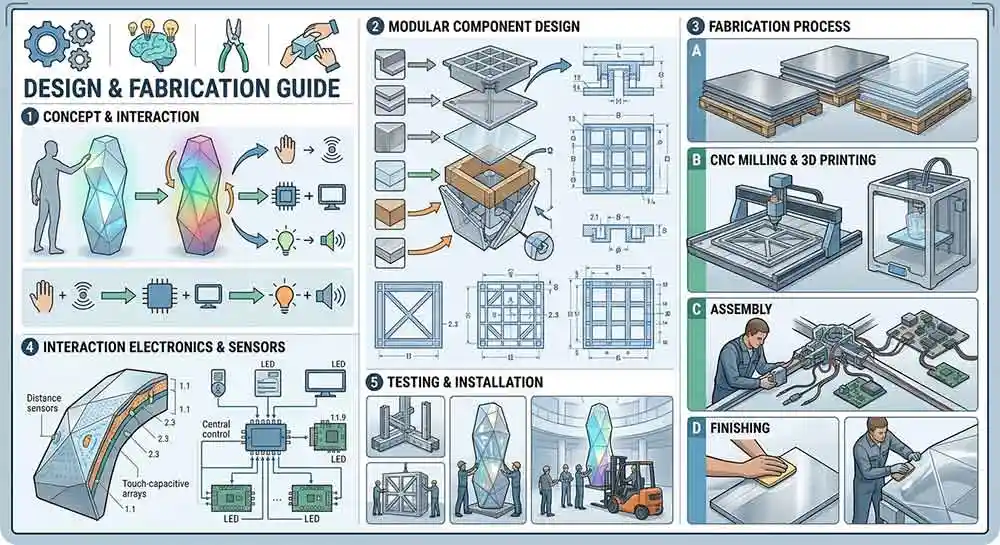
Interactive installation sculpture represents the frontier of public art — pieces that do not simply sit in a space but actively engage with viewers, inviting touch, sound, motion, or participation. From kinetic sculptures that move in response to wind to sound-reactive installations that change tone with proximity, interactive public art transforms passive observation into active experience.
For architects, developers, and experience designers, commissioning an interactive installation sculpture requires specialized knowledge spanning artistic design, mechanical engineering, electronics integration, and durable outdoor fabrication. This guide covers the key considerations for bringing an interactive sculpture project from concept to completion.
What Is Interactive Installation Sculpture?
Interactive installation sculpture encompasses any sculptural work designed to respond to human presence, environmental conditions, or programmed inputs. Categories include:
- Kinetic sculpture — Moving elements driven by motors, wind, water, or manual interactio
- Sound-reactive installations — Sculptures that generate, modify, or respond to audio
- Light-integrated works — LED, projection, or fiber-optic elements that change with interactio
- Participatory structures — Climbable, touchable, or walk-through forms designed for physical engagement
- Sensor-driven experiences — Motion, proximity, or pressure sensors triggering programmed responses
The unifying principle is that the artwork is incomplete without the viewer’s participation.
Design Considerations for Interactive Public Art
User Experience & Accessibility
Successful interactive public art must be intuitive. Viewers should understand — within seconds — how to engage with the piece. Design for diverse audiences: children and adults, able-bodied and mobility-assisted visitors, first-time and repeat viewers.
Consider the interaction loop: What triggers a response? What is the response? How does the experience evolve with sustained engagement? The most memorable interactive sculptures reveal increasing complexity the longer a viewer stays.
Durability & Safety
Public interactive sculptures face constant use — thousands of touches, weather exposure, and potential misuse. Every mechanical component must be engineered for high-cycle operation. All moving parts require guards or clearance to prevent pinch points. Electrical systems must meet IP65 or higher ingress protection ratings for outdoor use.
Materials selection is critical. Stainless steel (304 or 316 grade) resists corrosion from constant handling. Marine-grade aluminum offers light weight for moving elements. UV-stable powder coatings and anodized finishes protect surfaces from sun degradation.
Kinetic Sculpture Custom Fabricatio
Kinetic sculpture requires the closest integration of artistic design and mechanical engineering. For a commercial sculpture project involving motion, the following engineering challenges must be addressed: We walk through the complete fabrication process in our manufacturing guide: How Custom Sculptures Are Made: From Concept to Installation in 10 Steps.
Drive Systems
| Drive Type | Best Applications | Maintenance |
|---|---|---|
| Electric servo motors | Precise, programmable motion sequences | Periodic bearing lubricatio |
| Linear actuators | Push-pull movements, lifting elements | Seal inspection, lubricatio |
| Wind-driven systems | Environmental-response installations | Minimal (bearing checks) |
| Hydraulic/pneumatic | Heavy-load movement, dramatic actio | Fluid levels, seal replacement |
| Manual (hand-crank, lever) | Direct visitor participatio | Wear-pad replacement |
Control Systems & Programming
Modern interactive sculptures rely on programmable controllers (PLCs, Arduinos, Raspberry Pi) to manage sensor input and motion output. Programming considerations include:
- Sensor selectio
— Ultrasonic, infrared, capacitive touch, load cells, or microphone arrays - Response timing — Immediate versus delayed reactions, idle behaviors, reset sequences
- Fail-safe modes — Graceful degradation if a sensor or motor fails
- Remote monitoring — IoT connectivity for diagnostics and programming updates
Fabrication Process for Interactive Sculptures
The fabrication of an interactive installation differs from static sculpture in several important ways. At Y Sculptures, we follow a structured process: We walk through the complete fabrication process in our manufacturing guide: Custom Sculpture Manufacturing: 7-Step Process Guide.
Phase 1: Design Integratio
The sculpture’s aesthetic form must accommodate mechanical and electronic components without visible compromise. Our design team works in close coordination with engineers to conceal mechanisms within the sculptural form while maintaining access for servicing. 3D modeling helps verify that moving elements have adequate clearance and that wiring routes are protected.
Phase 2: Component Sourcing & Testing
All interactive components — motors, sensors, controllers, power supplies — are sourced from industrial-grade suppliers. Each component is bench-tested before integration. We build and test control system prototypes in a simulated environment before committing to final fabrication.
Phase 3: Fabrication & Assembly
Sculptural elements are fabricated in our 200,000-square-foot facility using CNC cutting, robotic welding, and precision machining. Electrical enclosures are integrated into the structure with weatherproof seals. All wiring is routed through conduits or sealed channels. Final assembly includes full system testing — each sensor, actuator, and lighting element is verified under simulated operating conditions.
Phase 4: Site Installation & Commissioning
On-site installation includes foundation work, structural assembly, electrical connection, and system commissioning. Our technicians calibrate sensors, program response behaviors, and train facility staff on basic maintenance. We provide a complete operations manual and remote support access.
Case Studies in Interactive Public Art
Y Sculptures has delivered interactive public art projects for shopping centers, museums, corporate plazas, and urban parks worldwide. One notable project involved a large-scale kinetic flower installation for a retail mixed-use development: 32 petal elements, each independently actuated by servo motors, that opened and closed in sequence based on visitor proximity. The sculpture incorporated 1,200 RGB LED nodes and responded to ambient music tempo. The project required 18 weeks from concept approval to installation, with a dedicated on-site commissioning period of 10 days.
Budget & Timeline Considerations
Interactive sculptures generally command higher budgets than static works due to the additional engineering, programming, and component costs. Factors influencing cost include:
- Number and complexity of interactive elements
- Custom vs. off-the-shelf mechanical components
- Control system sophisticatio
- Site preparation and electrical infrastructure requirements
- Long-term maintenance planning
Typical project timelines range from 12 to 24 weeks for design and fabrication, plus 1 to 3 weeks for site installation and commissioning.
Why Choose Y Sculptures for Interactive Sculpture?
Few manufacturers combine the artistic sensitivity, engineering depth, and fabrication capacity required for complex interactive installations. Y Sculptures brings all three together under one roof. From concept development through programming to final commissioning, we provide a single point of accountability backed by a 200,000-square-foot manufacturing facility and decades of combined experience.
Explore our full range of capabilities on the Solutions Hub or contact our team to discuss your interactive installation sculpture project.
D
Written by David Chen
David Chen is Design Director at Y Sculptures with 18+ years in large-scale sculpture design and fabrication. He specializes in FRP, stainless steel, and bronze sculpture engineering, overseeing design-to-production workflows for theme park attractions, public art installations, and brand IP mascots. David has personally directed over 300 custom sculpture projects for clients across 20+ countries.
Related Projects
Browse real projects matching this topic
Gardens & Resorts
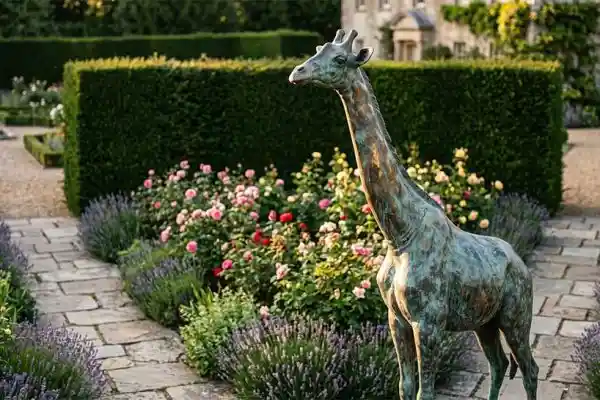
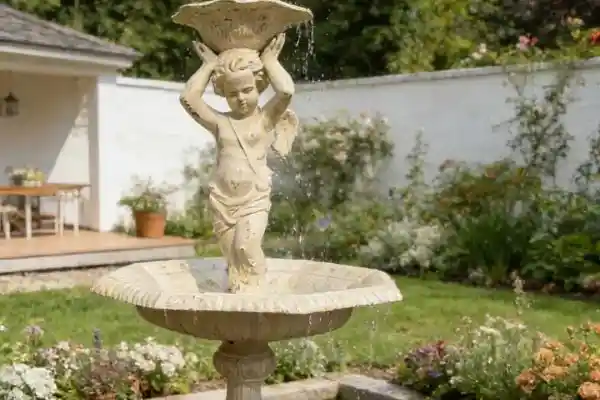
“Majestic Giraffe” — Hand-Cast Bronze Giraffe Garden Sculpture
Inflatable Sculpture
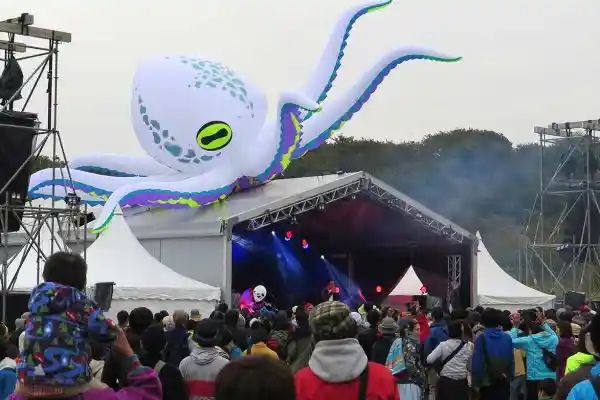
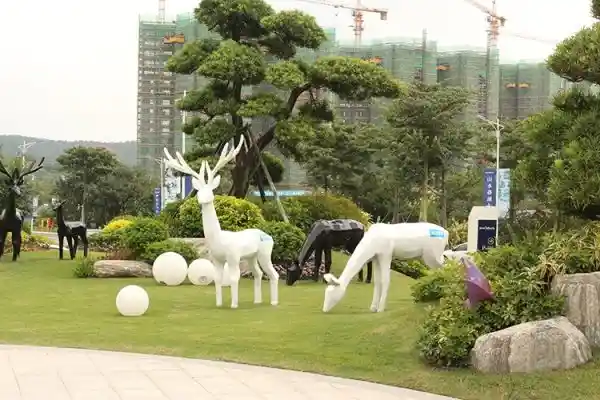
“The Harmonic Tentacle” Public Art & Event Synergy

Related Insights
Continue reading related articles
Brand Mascot & IP
Oct 13, 2026
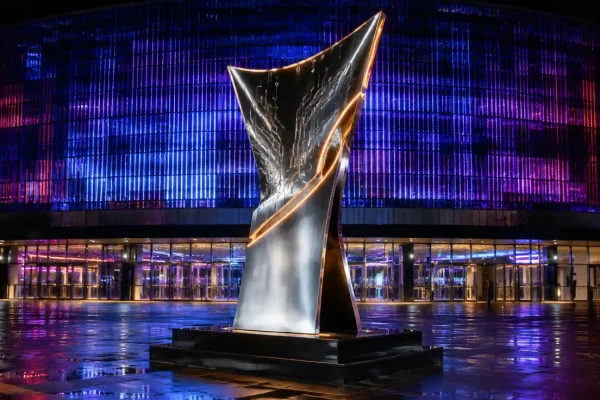
Esports Arena & Gaming Venue Sculpture: Landmarks, Trophies & Mascot Statues
Commercial & Hospitality
Oct 13, 2026
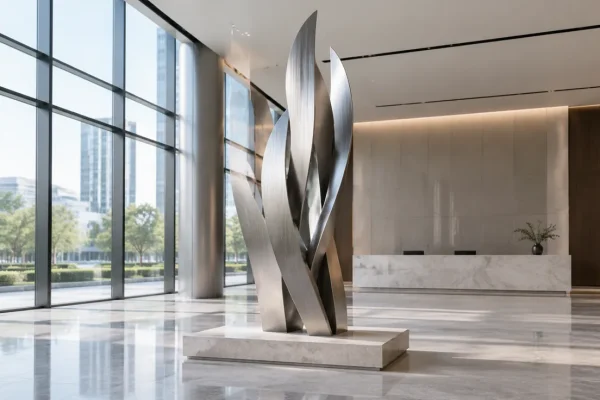
Corporate Lobby & Office Sculpture: Commissioning Guide for Developers
Custom Sculpture Insights & Guides
Oct 13, 2026
How Long Do Outdoor Sculptures Last? Material-by-Material Lifespan Guide
Our Sculpture Solutions
Explore our full range of custom sculpture services

IP Character Replication
Beyond 2D: Why IP Replication Drives Brand Engagement A character that lives only on a screen is easy to scroll...
Learn More →
Large Sculpture Custom
Engineering Monumental Scale A sculpture that stands 15 metres tall is not simply a 1.5-metre maquette scaled up ten times....
Learn More →
Original IP Development
From Concept to Icon Most sculpture enquiries begin with a reference: a licensed character, a film hero, an existing artwork...
Learn More →
Solutions Services
One Factory, Every Sculpture Material A sculpture brief rarely arrives pre-sorted by material. A client sends a reference image, a...
Learn More →
Custom Inflatables
Inflatable Sculptures as Brand Media Most sculptural commissions are permanent assets: they are built once, installed once, and admired for...
Learn More →
FRP & Fiberglass Sculpture Manufacturing
Custom FRP and fiberglass sculpture manufacturer - design, fabrication, and finishing.
Learn More →
Stainless Steel & Metal Sculpture Manufacturing
Custom stainless steel, bronze, corten, and aluminum sculpture manufacturer.
Learn More →
Theme Park Sculpture Services – Custom Amusement Park Statues
Custom Theme Park Sculptures – Bringing Imagination to Life Theme parks, amusement parks, zoos, and entertainment destinations thrive on immersive...
Learn More →
Commercial Sculpture Services – Custom Brand Mascots & Mall Art
Custom Commercial Sculptures – Elevate Your Brand & Space In today's competitive retail and commercial environment, first impressions matter. Commercial...
Learn More →