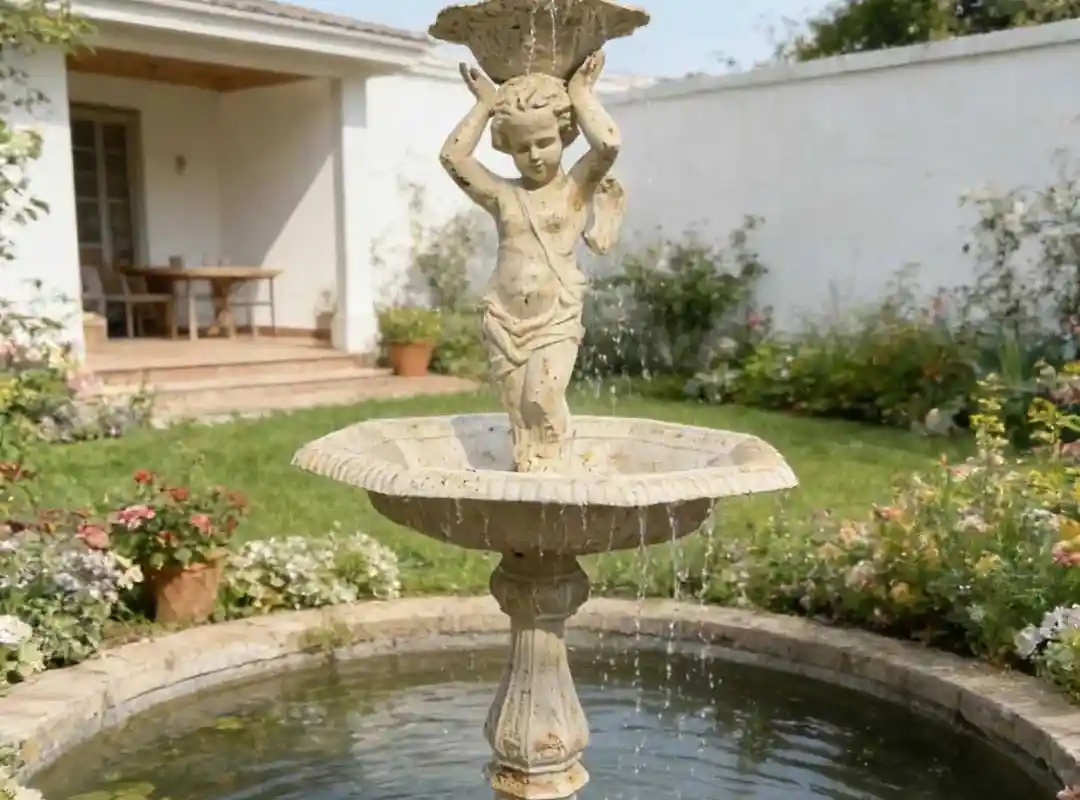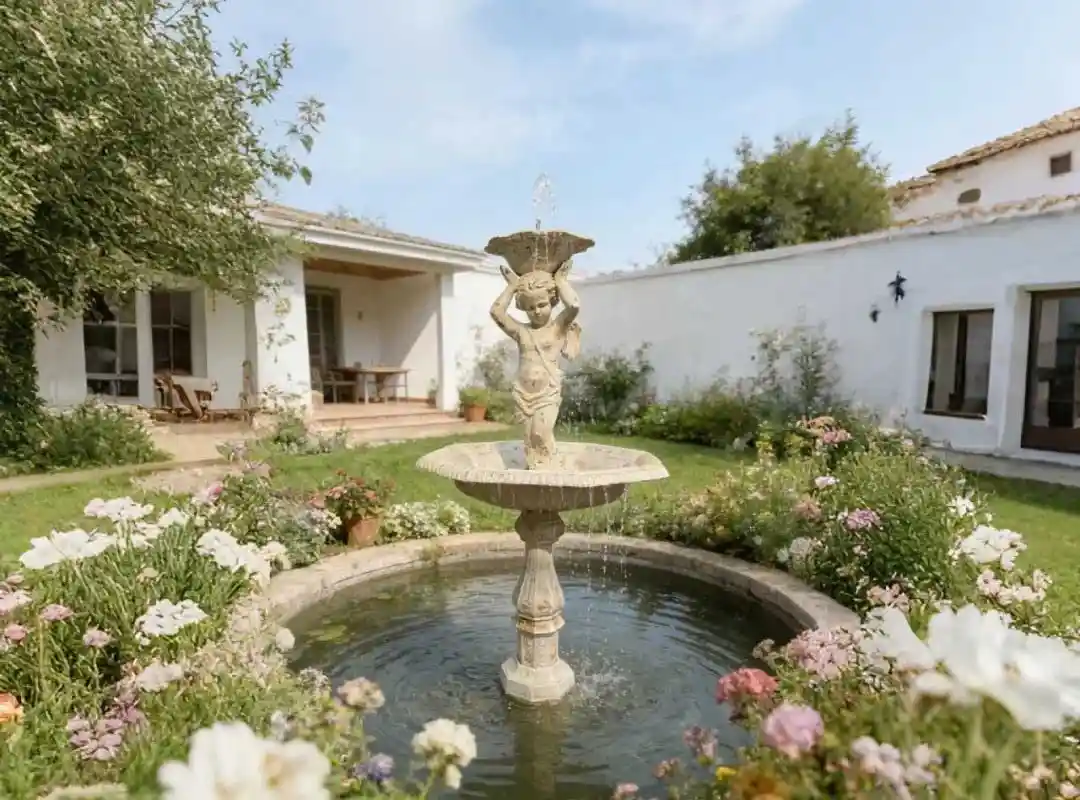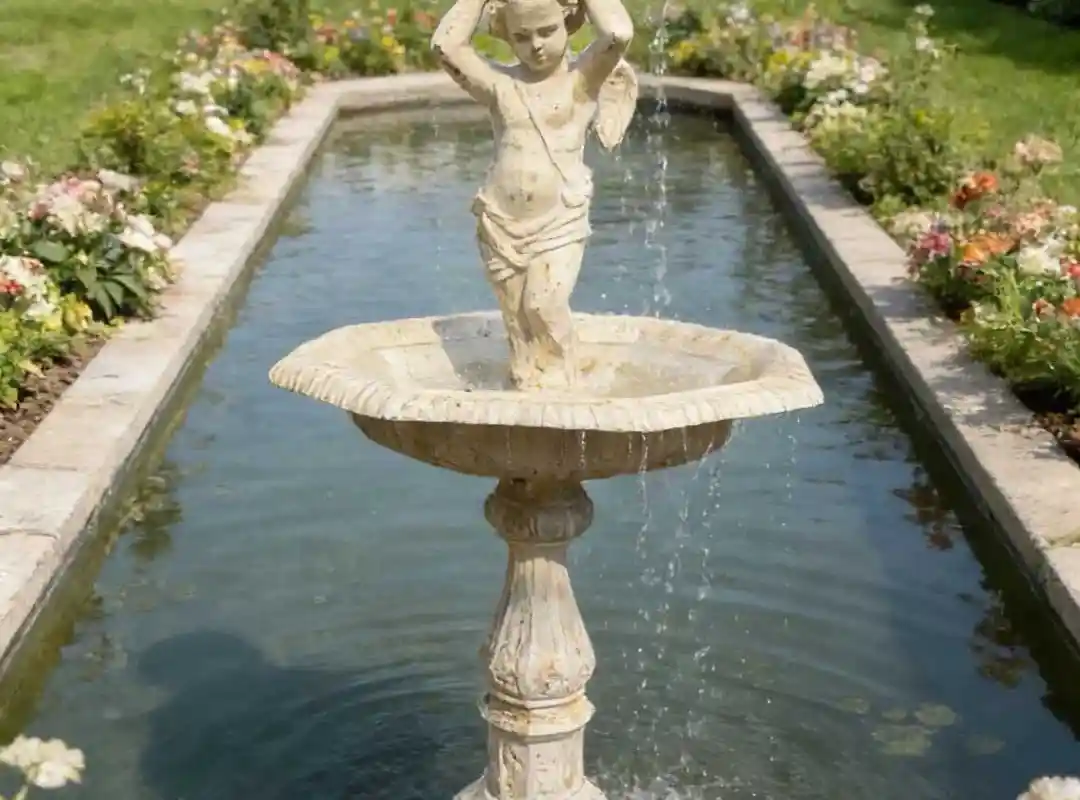
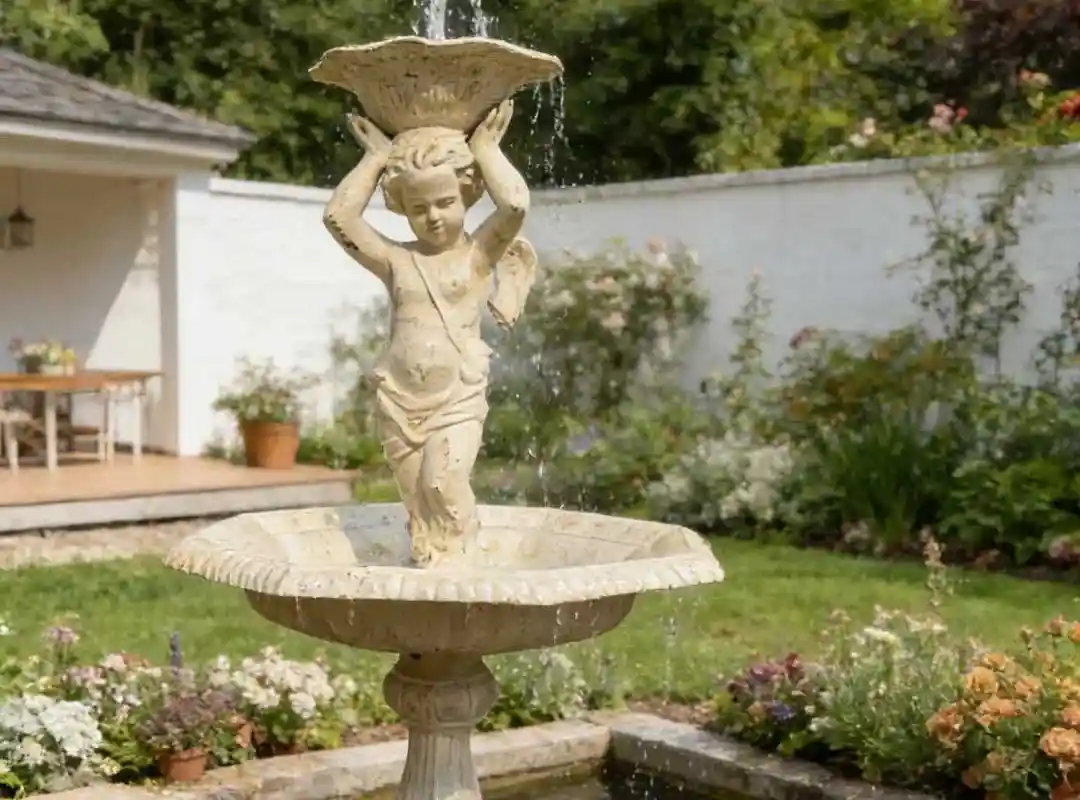
The Timeless Flow – Antique Cast Iron Garden Fountain & Water Feature Sculpture
Gardens & Resorts
Project Timeline
-
Total Duration: 12 Weeks (3 Months)
-
Phase 1: Conception & Design Customization: Weeks 1–3
-
Phase 2: Molding & Iron Casting: Weeks 4–7
-
Phase 3: Finishing, Weatherproofing & Patina Application: Weeks 8–9
-
Phase 4: Logistics & On-site Installation: Weeks 10–12
-
Budget
-
Total Estimated Budget: $18,500 USD
-
Includes: Raw material sourcing, casting craftsmanship, plumbing/pump system integration, protective anti-rust coating, crating, and final installation.
-
Sculpture Dimensions
-
Overall Height: 78 inches
-
Basin Diameter: 45 inches
-
Base Footprint: 22 inches × 22 inches
Note: The plumbing is designed for a closed-loop water recycling system, requiring a standard 110V power outlet and a level concrete foundation.
Cast Iron in a Garden Setting
Cast iron earns its place in a garden because of weight and stability rather than for structural reasons. A fountain of this kind is inherently top-heavy in appearance and it is standing outdoors where it will be pushed, leaned on and, in a public setting, occasionally climbed. The mass of a cast iron body means a figure at human height simply does not move, which is a real advantage over a lighter composite in an exposed position.
The trade-off is brittleness. Cast iron is strong in compression and weak against impact, so the design avoids thin unsupported sections and any slender projecting detail that a lawn mower, a wheelbarrow or a gate could catch. Where the piece has a decorative element that cannot be thickened for aesthetic reasons, it is cast as a separate component and mechanically fixed so it can be replaced rather than repaired in place.
Weatherproofing and Patina Application
Bare cast iron outdoors will rust, and the finish schedule therefore does real work rather than being cosmetic. The castings are prepared and primed, then finished with a coating system that seals the surface and carries colour, with the antique or patinated appearance built up in layers and toned by hand rather than sprayed flat. That layered build is what gives an older-looking piece its variation; a single uniform coat is what makes a reproduction look new.
Where a genuine aged appearance is wanted, the process works in the reverse direction to a clean finish: a base colour is laid down, then a darkening and weathering pass is applied and selectively removed so that the raised modelling stays lighter and the recesses stay darker. The final coat is a matt sealer rather than a gloss, since gloss on cast iron reads as modern rather than period.
Water Circuit, Pump and Basin
The water feature side of the piece is the half that determines whether it will still be running in three years. The pump is sized to the head height and the flow the design intends, with a flow control valve so that it can be tuned on site rather than fixed at manufacture. The pipework is run inside the casting where possible, which protects it and keeps the mechanism invisible from every viewing angle.
The basin catchment needs to be sized for wind drift rather than for the sculpture alone. An exposed garden setting will carry water beyond the apparent footprint on a breezy day, and a basin that is only just wider than the piece will put water onto the paving or into the planting, which is where fountains most often cause complaints. The reservoir should also be accessible from above for cleaning without dismantling the fountain body.
Winter Care and Seasonal Shutdown
An outdoor fountain in a climate with frost has a defined operating season. Water left standing in the pipework, the pump housing or the casting cavities will freeze and expand, and that is the single most common cause of damage to a fountain of this type. The shutdown procedure is to drain the basin, blow through or drain the pipework, remove the pump and store it indoors, and cover the body so that meltwater cannot refill the reservoir.
During the season the routine is straightforward: keep the basin clear of leaves so that the pump is not starved, check the water level regularly since evaporation on a windy site is faster than most owners expect, and inspect the coating at the base where splash concentrates. At the end of each season the coating should be washed and any chipped area touched in — cast iron holds a finish for many years provided a chip is not left exposed over a winter.
Project Gallery