Fiberglass Lifelike Sika Deer Sculptures for Landscape Enhancement
Theme Parks
1. Project Background
The primary objective of this project is to integrate nature-inspired artistry into modern landscape design. By deploying high-fidelity, fiberglass-reinforced plastic (FRP) Sika deer sculptures, the project aims to create a harmonious, vibrant, and ecological atmosphere within the targeted outdoor space.
Sika deer traditionally symbolize longevity, auspiciousness, and the serene beauty of nature. Crafted from premium, weather-resistant fiberglass, these life-sized animal sculptures will serve as captivating visual anchors, drawing visitors in and significantly elevating the aesthetic and commercial value of the landscape.
-
Project Name: “Echoes of the Forest” – Ecological Sika Deer Sculpture Installation Project
-
Application Scenarios: Urban parks, botanical gardens, luxury residential communities, commercial plazas, and eco-tourism resorts.
2. Project Specifications & Timeline
Dimensions & Budget
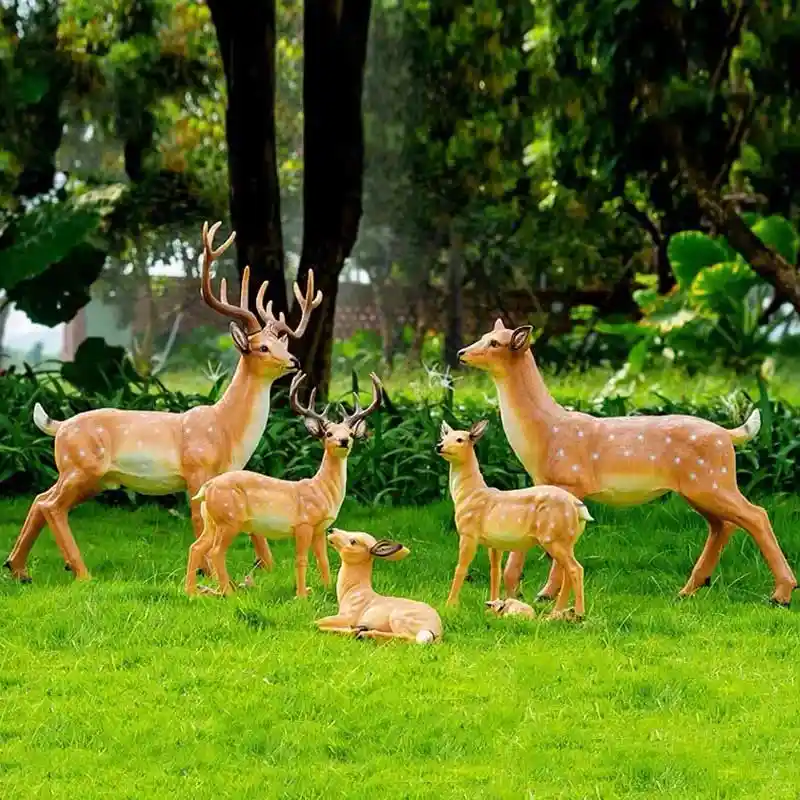
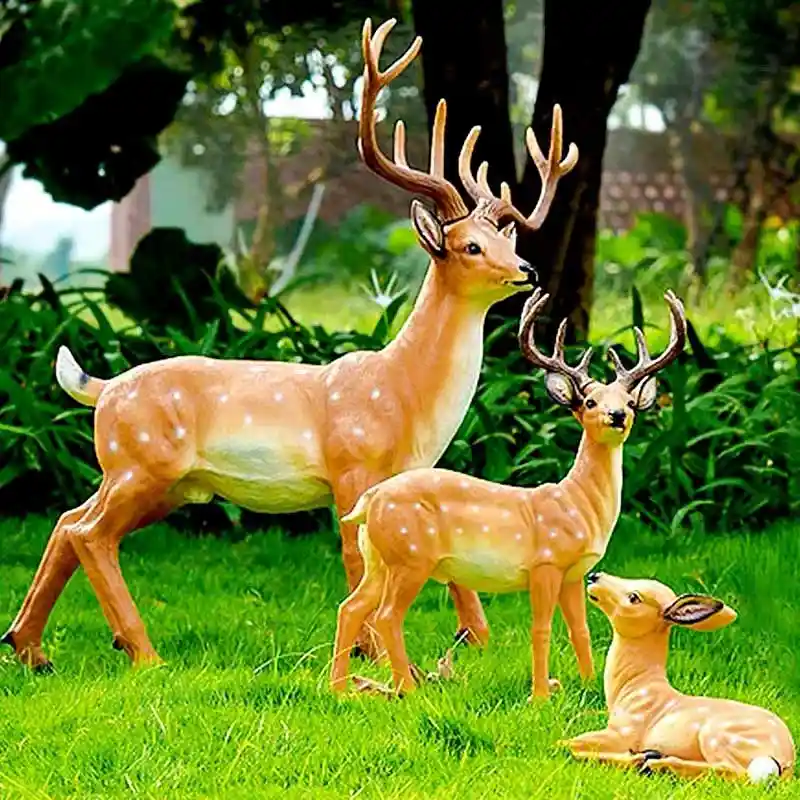
The project features a family set of three Sika deer (Buck, Doe, and Fawn) to create a natural, storytelling dynamic.
| Sculpture Type | Dimensions (Length × Width × Height) | Estimated Budget (USD) |
| Standing Buck (Male) | $71 times 24 times 79 text{ inches}$ | $2,200 |
| Foraging Doe (Female) | $59 times 20 times 51 text{ inches}$ | $1,600 |
| Resting Fawn (Baby) | $35 times 16 times 28 text{ inches}$ | $900 |
| Total Project Budget | Includes custom molds, UV-resistant painting, and reinforcement | $4,700 |
Note: Budgets are estimated factory-gate costs and exclude international shipping, customs duties, and on-site installation.
Project Timeline
The total estimated cycle from design confirmation to delivery is 45 Days.
-
Phase 1: Design & Blueprinting (7 Days): 3D modeling and structural engineering approval.
-
Phase 2: Clay Sculpting & Mold Making (14 Days): Hand-carving the master clay model to capture lifelike muscle textures and fur details.
-
Phase 3: Fiberglass Casting & Assembly (10 Days): Layering high-strength resin and fiberglass matrix, followed by internal steel framework reinforcement.
-
Phase 4: Art Painting & Weatherproof Coating (7 Days): Multi-layered automotive-grade acrylic painting for realistic spots, finished with a UV-resistant matte clear coat.
-
Phase 5: Quality Assurance & Packaging (7 Days): Rigorous inspection, followed by secure wooden crate packaging for international transit.
3. Achieving Lifelike Anatomy in FRP
Lifelike animal work lives or dies on proportion and on how the animal stands. A sika deer has a specific carriage — a short back, a high neck set, and legs that taper sharply below the knee — and a lifelike figure has to reproduce that stance or it reads as generic deer-shaped furniture. The sculpting therefore starts from the skeleton and the major muscle groups, with the coat detail added last, so that the underlying form would still be convincing with the surface stripped away.
The standing buck at roughly six feet by two feet is a manageable single-piece build, but the head and the antlers are modelled as a separate pattern and moulded independently. That split is what protects the fine detail through demoulding and also makes transport and repair simpler, since the most fragile component can be crated and handled on its own.
4. Fur Texture and Hand-Painted Finish
A convincing coat is a two-layer problem: texture in the mould, colour on the surface. The texture is tooled into the pattern as shallow directional relief, deep enough to catch light and look like hair, shallow enough that it will not collect water in an exterior installation. Colouring is then done by hand in stages — a base coat, mid-tone shading along the muscle groups, and a lighter pass across the back and haunches where the light falls.
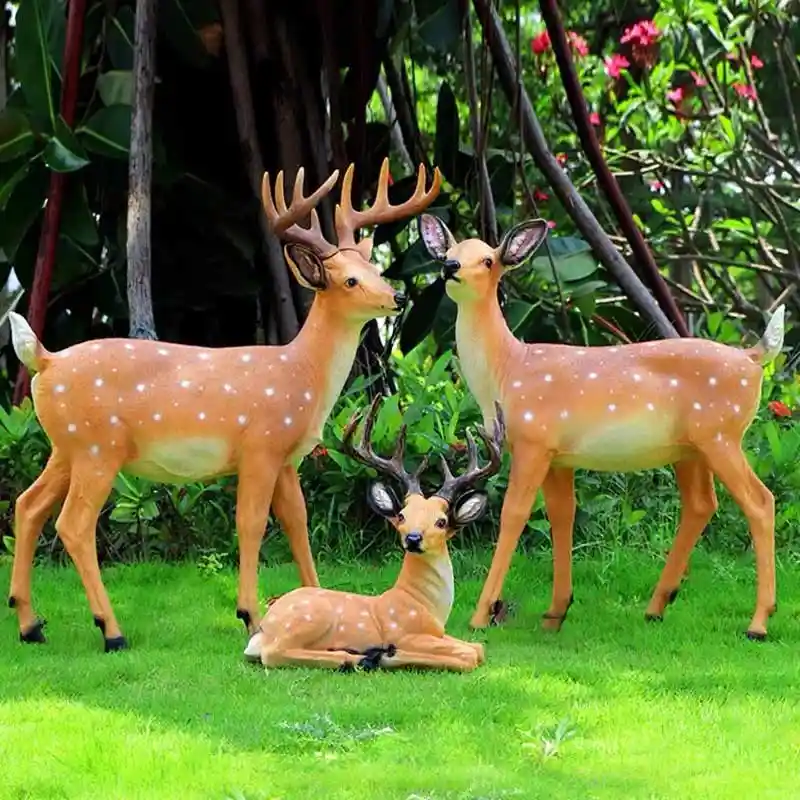
Airbrushed gradients are what stop a fibreglass animal reading as a painted ornament. Hard-edged markings, such as the flank spots on a sika deer, are masked and cut precisely, then softened slightly along the edges so the transition looks organic rather than stencilled. A UV-stable clear coat over the completed paint carries the exterior exposure duty.
5. Siting a Herd in Landscape
Single animals look like ornaments; groups look like landscape. Where a project uses several figures, the value comes from arrangement rather than from the count — staggered positions, varied head directions, and slight differences in pose read as a living group, while a row of identical units reads as a fence.
Ground fixing in planting beds is usually a concealed ground plate set just below grade, which lets the figure sit in the bed without a visible base and allows it to be lifted out for lawn or bed maintenance without excavation. The plate should be set below the depth a mower or a strimmer will reach, because those are the two things that actually damage landscape figures.
6. Outdoor Care
The routine outdoors is a seasonal wash with fresh water and an annual fastener check, plus an inspection of the point where the legs meet the ground plate — the usual location for any movement in the base. Directional fur texture should be rinsed rather than scrubbed; brushing it will flatten the detail that makes the surface read as a coat.
Colour on an exterior figure fades from the top down, so the back and the antlers are the areas to check against the retained spray-out reference. A localised recoat on those surfaces is straightforward while the original colour record exists, and it is the reason we keep a panel from each batch rather than relying on a paint code alone.
Project Gallery