
Custom Sculpture Insights & Guides
Themed Landscaping with Custom Sculptures: Design Guide
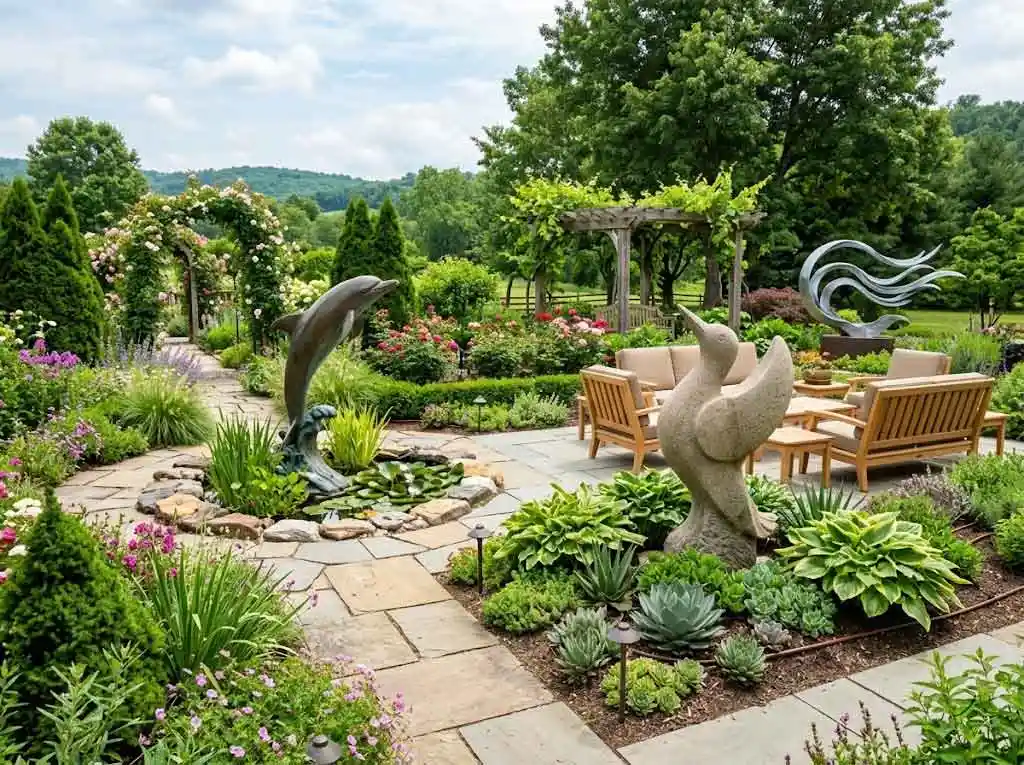
Theme parks, amusement parks, and resort destinations thrive on immersion. Every corner of the guest experience — from the moment they step through the entrance gates to the queue lines, dining patios, and quiet rest zones — contributes to the story you are telling. One of the most powerful and lasting tools for achieving this immersion is themed landscaping with custom sculptures. Unlike off-the-shelf statuary or generic plantings, custom landscape sculptures are designed and fabricated specifically for a park’s narrative, brand identity, and physical environment.
This design guide explores the key landscape zones where custom sculptures have the greatest impact, the material considerations for outdoor installations, and how to integrate sculpture with planting and water features for a cohesive visual experience.
Landscape Zone Types for Custom Sculptures
1. Entry & Gateway Zones
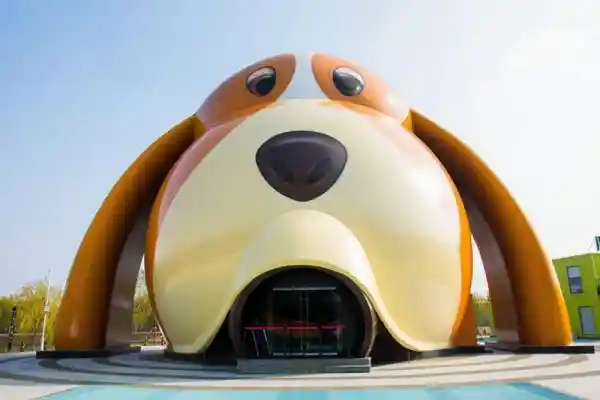
The park entry is the first impression and the most heavily photographed spot on the property. Large-scale gateway sculptures should be iconic, bold, and immediately readable from a distance. Materials must withstand high wind loads and constant public interaction. For parks integrated with hotels and resorts, the commercial and hospitality sculpture guide offers strategies for extending the entry experience into adjacent properties.
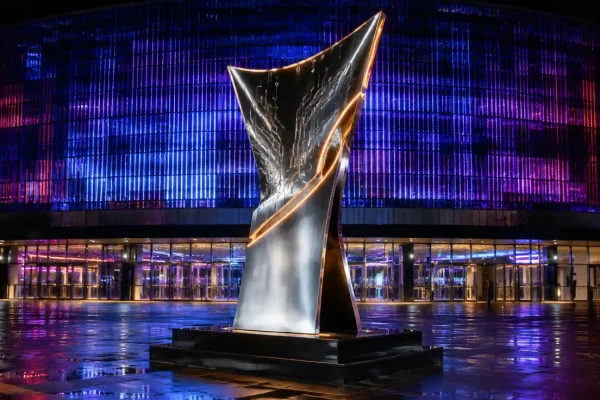
A celestial gateway sculpture, for example, can anchor a resort entrance with a visually striking form that signals arrival into a different world. Entry sculptures also serve as orientation landmarks — guests naturally navigate toward them, making them valuable for crowd flow management.
2. Dining & Food Court Areas
Dining zones benefit from sculptures that create a relaxed, playful, or thematically appropriate atmosphere. Medium-scale character sculptures, oversized food-themed pieces, or whimsical wildlife work well in these settings. They provide visual interest for guests waiting for food and serve as natural dividers between seating clusters. Custom sculptures in dining areas should be designed with easy-clean surfaces, as food and beverage splatter is common.
3. Queue & Wait Areas
Queue lines are the most under-designed spaces in many parks. Strategically placed custom sculptures can transform a tedious wait into an engaging pre-show experience. Multi-point viewing — where the sculpture reveals new details as guests advance in line — rewards patience and reduces perceived wait time. Sculptures in queue areas should be durable enough to withstand constant touching and occasional climbing by children, with no sharp edges or small detachable parts.
4. Photo Opportunity Zones
Dedicated photo-op sculptures are essential for social media marketing. These should be designed at a scale that allows groups to stand beside or interact with the piece. The material finish must photograph well under varying lighting conditions. For parks exploring temporary or rotating photo installations, brand activation with giant inflatables provides a cost-effective alternative with high social media shareability.
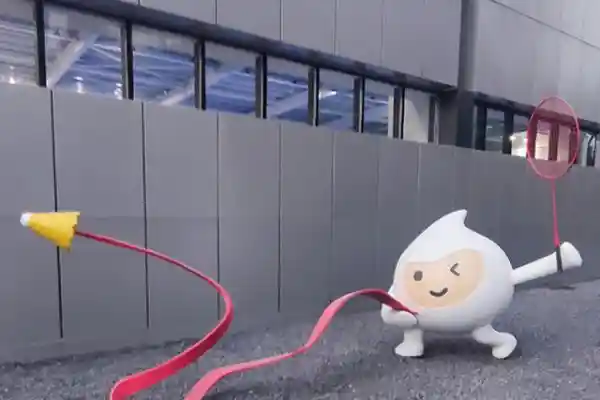
Bright, saturated colors or high-contrast textures perform best. A sports-themed cartoon sculpture in a sports park or family entertainment centre, for instance, creates natural photo moments that guests share across social platforms, amplifying your brand reach organically.
5. Rest & Relaxation Areas
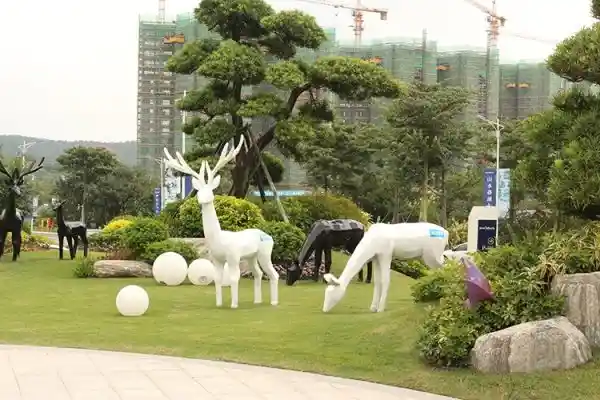
Quiet zones and rest areas call for soothing, contemplative sculptures. Naturalistic animal forms, abstract geometric shapes, or water-integrated pieces help guests decompress. Serene white deer sculptures in a shaded garden setting, for example, provide a calming focal point that encourages guests to sit longer, increasing per-capita spend at adjacent beverage and snack outlets.
Material Selection for Outdoor Landscape Sculptures
Choosing the right material is critical for outdoor theme park installations. The wrong material leads to rapid degradation, high maintenance costs, and safety hazards. Here are the primary considerations:
| Material | Best For | Key Advantages | Considerations |
|---|---|---|---|
| FRP (Fibreglass Reinforced Plastic) | Large-scale, colourful character sculptures | Lightweight, UV-resistant, weatherproof, low maintenance | Requires gel-coat protection against graffiti |
| Stainless Steel | Gateway arches, abstract forms | Extremely durable, polished finish, modern aesthetic | Higher cost, can heat up in direct su |
| Bronze / Cast Metal | Classic, heritage-themed parks | Timeless patina, high value perceptio | Heavy, expensive, requires patina maintenance |
| Concrete / GFRC | Rustic, natural-themed areas | Can mimic stone/wood, very durable | Heavy, can crack if reinforcing is insufficient |
| Polyurethane Foam (Urethane) | Themed rockwork, tree trunks, faux terrai | Lightweight, easily shaped, paintable | Requires protective coating for UV and impact |
For most theme park applications, FRP (fibreglass) offers the best balance of cost, durability, and design flexibility. Our material cost comparison for FRP, stainless steel, and bronze sculptures helps planners choose the right material for their budget. Y Sculptures uses high-grade FRP with UV-resistant gel coats and internal steel armatures for structural integrity, ensuring landscape sculptures remain vibrant and safe for 10-15 years with minimal maintenance. Our manufacturing guide — How Custom Sculptures Are Made: From Concept to Installation in 10 Steps — covers everything from mold-making to final finishing.
Integrating Sculptures with Planting and Water Features
The most memorable themed landscapes do not treat sculpture, planting, and water as separate elements — they weave them together:
- Planting Integration: Use low ground covers and ornamental grasses at the base of sculptures to anchor them naturally. Climbing vines on trellis structures adjacent to sculptures add depth. Avoid aggressive root systems near sculpture foundations.
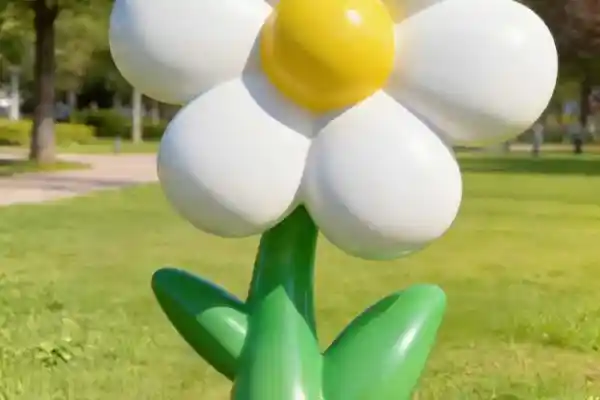
- Water Feature Integration: Sculptures as fountain centrepieces — where water cascades over or sprays from the sculpture — add motion and sound. A blossom-themed oasis installation can pair sculptural floral forms with reflective pools and misting effects for a multi-sensory experience.
- Lighting Integration: Uplighting and colour-changing LEDs transform sculptures from daytime landmarks to nighttime attractions. Accent lighting integrated into the sculpture base or the surrounding planting reduces light pollution while maximising visual drama.
Parks featuring branded IP characters will find the IP character sculpture development guide useful for ensuring mascot designs translate effectively into the three-dimensional landscape environment.
Case Examples
Example 1: Sports Park Character Icons
A large outdoor sports park installed a series of cartoon sports character sculptures at entry points and along pedestrian walkways. Made from FRP with bright automotive-grade paint, these sculptures withstand year-round sun exposure and light rain. The park reports a 35% increase in guest-uploaded social media photos featuring the sculptures, driving free brand exposure. Our manufacturing guide — Custom Sculpture Manufacturing: 7-Step Process Guide — covers everything from mold-making to final finishing.
Example 2: Serene Garden Sanctuary
A resort’s quiet zone features life-sized white deer sculptures positioned among ornamental grasses and lavender beds. The deer are finished in a white matte gel coat that diffuses light softly, creating a tranquil atmosphere. A low recirculating water channel runs at the deer’s feet, adding gentle sound and movement without noise pollution.
Conclusio
Custom landscape sculptures are a high-ROI investment for theme parks and resorts when designed with purpose. By matching sculpture type, material, and placement to specific landscape zones — and by integrating thoughtfully with planting, water, and lighting — you create an environment that guests remember, photograph, and return to year after year.
Whether you are planning a new park development, a themed expansion, or a resort upgrade, Y Sculptures’ solutions and services team can guide you from concept through fabrication and installation, delivering FRP, metal, and mixed-media sculptures engineered for the demands of the outdoor entertainment environment.
J
Written by James Liu
James Liu is Project Manager at Y Sculptures, specializing in end-to-end custom sculpture project delivery for commercial, hospitality, and public art sectors. With 12 years in the industry, James coordinates design approvals, material sourcing, fabrication timelines, international shipping logistics, and on-site installation. He has successfully delivered 500+ projects to 30+ countries.
Related Projects
Browse real projects matching this topic
Related Insights
Continue reading related articles
Brand Mascot & IP
Oct 13, 2026
Esports Arena & Gaming Venue Sculpture: Landmarks, Trophies & Mascot Statues
Commercial & Hospitality
Oct 13, 2026
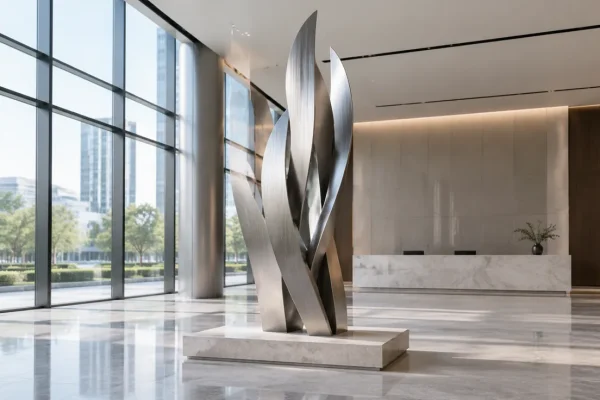
Corporate Lobby & Office Sculpture: Commissioning Guide for Developers
Custom Sculpture Insights & Guides
Oct 13, 2026
How Long Do Outdoor Sculptures Last? Material-by-Material Lifespan Guide
Our Sculpture Solutions
Explore our full range of custom sculpture services

IP Character Replication
Beyond 2D: Why IP Replication Drives Brand Engagement A character that lives only on a screen is easy to scroll...
Learn More →
Large Sculpture Custom
Engineering Monumental Scale A sculpture that stands 15 metres tall is not simply a 1.5-metre maquette scaled up ten times....
Learn More →
Original IP Development
From Concept to Icon Most sculpture enquiries begin with a reference: a licensed character, a film hero, an existing artwork...
Learn More →
Solutions Services
One Factory, Every Sculpture Material A sculpture brief rarely arrives pre-sorted by material. A client sends a reference image, a...
Learn More →
Custom Inflatables
Inflatable Sculptures as Brand Media Most sculptural commissions are permanent assets: they are built once, installed once, and admired for...
Learn More →
FRP & Fiberglass Sculpture Manufacturing
Custom FRP and fiberglass sculpture manufacturer - design, fabrication, and finishing.
Learn More →
Stainless Steel & Metal Sculpture Manufacturing
Custom stainless steel, bronze, corten, and aluminum sculpture manufacturer.
Learn More →
Theme Park Sculpture Services – Custom Amusement Park Statues
Custom Theme Park Sculptures – Bringing Imagination to Life Theme parks, amusement parks, zoos, and entertainment destinations thrive on immersive...
Learn More →
Commercial Sculpture Services – Custom Brand Mascots & Mall Art
Custom Commercial Sculptures – Elevate Your Brand & Space In today's competitive retail and commercial environment, first impressions matter. Commercial...
Learn More →