
Custom Sculpture Insights & Guides
Steel Welding vs FRP Molding for Large Sculptures Guide
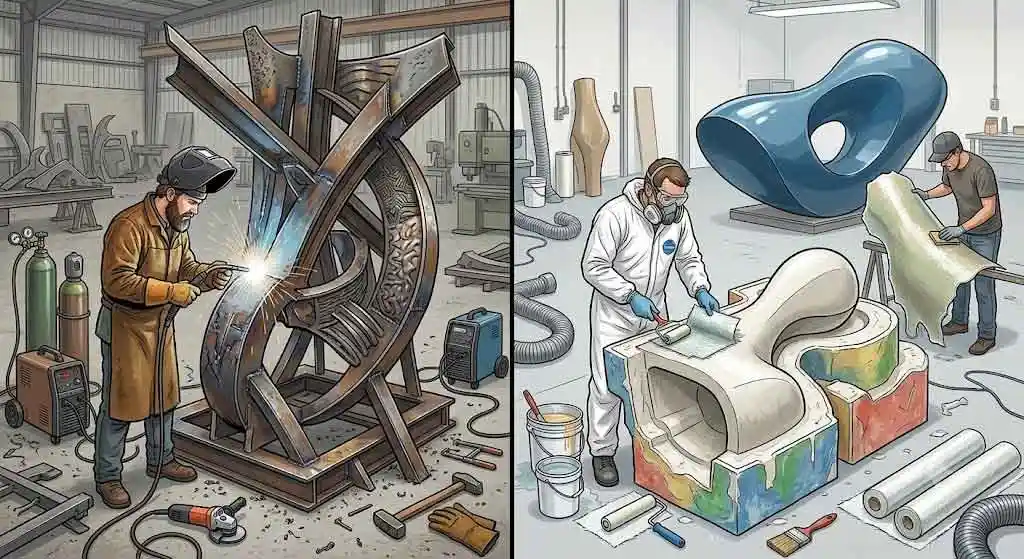
When engineering a large sculpture for a public space, commercial hospitality venue, corporate campus, or cultural institution, one of the earliest and most consequential decisions is material selection. Two dominant technologies compete for the majority of monumental sculpture work: welded steel (carbon steel or stainless) and FRP (fiberglass reinforced plastic) molding. Each has distinct mechanical properties, fabrication workflows, cost structures, and aesthetic capabilities. This article provides a side-by-side technical comparison for engineers and project managers evaluating which approach best suits their next sculpture project. We walk through the complete fabrication process in our manufacturing guide: Custom Sculpture Manufacturing: 7-Step Process Guide.
Head-to-Head Comparison: Steel Welding vs. FRP Molding
| # | Criterio | Steel Welding | FRP Molding |
|---|---|---|---|
| 1 | Weight | Heavy (~7,850 kg/m³). Requires reinforced foundations and heavy lifting equipment. | Light (~1,800 kg/m³). Reduces foundation costs and enables rooftop or bridge-installed sculptures. |
| 2 | Design Freedom | Limited by weld access, material thickness transitions, and thermal distortion. Best for faceted or structurally rationalized forms. | Virtually unlimited. Complex organic curves, undercuts, and textured surfaces are straightforward in molded FRP. |
| 3 | Maximum Scale | No theoretical limit. Steel skeletons can be spliced and field-welded for 30+ m structures. | Practical limit around 20 m using single-piece sections. Larger sculptures are assembled from bolted or bonded sub-sections. |
| 4 | Surface Finish Quality | Depends on welder skill. Grinding and filler work is required to hide weld seams. Class A automotive finish is difficult and expensive. | Inherently smooth. Mold surface transfers directly to the part. Class A finish achievable with standard tooling practices. |
| 5 | Corrosion Resistance | Carbon steel requires hot-dip galvanizing or continuous paint maintenance. Stainless steel (316L) resists well in most environments. | Naturally corrosion-resistant. UV-stabilized gelcoat and polyurethane topcoat provide 10–15 year exterior durability. |
| 6 | Structural Strength (Tensile) | Mild steel: 400–550 MPa yield. Stainless 304: ~520 MPa. | FRP laminate: 150–350 MPa (depends on fiber orientation and glass content). Lower absolute but adequate when properly engineered. |
| 7 | Impact Resistance | Excellent. Steel deforms plastically before failure — damage is visible and repairable. | Good but brittle if thin. High-quality FRP with adequate laminate thickness can match steel in specific impact scenarios. |
| 8 | Repairability | Straightforward. Weld repairs, bolt-on patches, or section replacement in the field. | Requires trained laminators. Gelcoat cracks and delamination repairs demand matched resin systems and environmental control. |
| 9 | Fabrication Lead Time | 8–16 weeks typical. No mold-making needed, but weld time scales linearly with size. | 12–24 weeks typical. Longer due to mold fabrication, but per-unit production runs faster after tooling is built. |
| 10 | Per-Unit Cost (1–5 unit runs) | $$ Moderate. No tooling cost. Steel + labor scales predictably. | $$$–$$$$ for first unit (high tooling), then $$ for duplicates once mold is paid off. |
When to Choose Steel Welding
Steel is the right choice when the sculpture must bear heavy dynamic loads — flagpole integration, climbing structures for children, or sculptures that double as architectural elements such as structural columns or windbreaks. Its plastic deformation behavior (visible bending before failure) makes it inherently safer for public touch-and-climb applications. Steel also excels for very large assemblies where the cost of a full-scale FRP mold would be prohibitive. The Chromium Sentinel project demonstrates how welded steel plate with a polished stainless finish can create an imposing, high-durability landmark in a high-traffic public space.
Steel is also preferred for sculptures requiring integrated lighting, water features, or kinetic components, because attachment brackets, plumbing passes, and motor mounts can be welded directly to the structure without needing to design bonded inserts.
When to Choose FRP Molding
FRP is the superior choice when the design calls for complex curves, organic flowing forms, or smooth surfaces that would require extensive metalworking to achieve in steel. It is also preferred when weight restrictions apply — for example, sculptures installed on rooftops, suspended from ceilings, or mounted on glass curtain walls. The lightweight nature of FRP significantly reduces structural reinforcement costs in the host building or landscape. The Cyber Vanguard IP character sculpture and Whispers of Nature illustrate how FRP enables the fluid, sculptural forms that define contemporary public art while maintaining structural integrity and weather resistance. Our manufacturing guide — How Custom Sculptures Are Made: From Concept to Installation in 10 Steps — covers everything from mold-making to final finishing.
For projects requiring multiple identical pieces — branded mascots, wayfinding sculptures, or series installations — FRP is significantly more cost-effective because the mold cost is amortized across multiple castings. Each subsequent casting requires only materials and labor without the tooling overhead.
Cost Analysis
For a broader pricing benchmark across FRP, stainless steel, bronze, and concrete, our material cost comparison guide provides detailed per-cubic-meter cost data. Below is a side-by-side breakdown for steel versus FRP specifically.
| Cost Component | Steel Welding | FRP Molding |
|---|---|---|
| Tooling (mold/pattern) | $0 (no mold required) | $15,000–$80,000+ (depends on size and complexity) |
| Material cost per m³ | $500–$1,200 (carbon steel) | $400–$900 (resin + glass, depending on resin type) |
| Fabrication labor | $60–$120/hr (certified welders) | $40–$80/hr (laminators and finishers) |
| Surface finishing | $2,000–$15,000 (grinding, filling, coating) | $1,000–$8,000 (seam blending, priming, painting) |
| Transportatio |
Higher (heavy → larger truck, crane) | Lower (light → standard flatbed) |
| Installation (foundation) | Higher (heavy → deep footings, rebar, concrete) | Lower (light → surface mount or minimal footings) |
| 25-year maintenance | $10,000–$40,000 (repainting, rust remediation, weld inspection) | $5,000–$15,000 (gelcoat touch-up, recoat every 10–15 years) |
Best-Use Scenario Summary
- Abstract geometric monuments → Steel. Faceted designs, truss-like structures, and angular forms are naturally suited to welded fabrication.
- Organic, flowing, or figurative sculptures → FRP. The mold can capture every nuance of the artist’s original clay or digital model.
- Sculptures on a budget for first productio
→ Steel. No tooling cost and shorter lead time for a single piece. - Multi-unit branded installations → FRP. Once the mold is paid off, per-unit cost drops 40–60%.
- Water features and marine environments → FRP (vinyl ester resin). Inherent corrosion resistance eliminates the maintenance burden of protective coatings on steel.
- Child-interactive or climbing sculptures → Steel. Predictable structural behavior under dynamic loads and field-repairable damage.
- Rooftop or weight-sensitive locations → FRP. Weight savings of 75% compared to steel can eliminate the need for structural reinforcement.
Conclusio
Neither steel nor FRP is universally superior — the optimal material depends on the specific requirements of scale, form, environment, budget, and programmatic use. Many large sculpture projects benefit from hybrid approaches: a steel primary armature for structural loads clad in FRP panels for aesthetic finish. At Y Sculptures, our engineering team routinely evaluates both technologies and their combinations to recommend the most efficient and durable solution for each client’s unique vision. For procurement teams evaluating suppliers, our manufacturing QC checklist provides a comprehensive framework for assessing factory quality standards. Contact us to discuss which approach is right for your next landmark sculpture.
D
Written by David Chen
David Chen is Design Director at Y Sculptures with 18+ years in large-scale sculpture design and fabrication. He specializes in FRP, stainless steel, and bronze sculpture engineering, overseeing design-to-production workflows for theme park attractions, public art installations, and brand IP mascots. David has personally directed over 300 custom sculpture projects for clients across 20+ countries.
Related Projects
Browse real projects matching this topic
Inflatable Sculpture
“Dream Whale” — Serene Blue Inflatable Ocean Guardian
Inflatable Sculpture
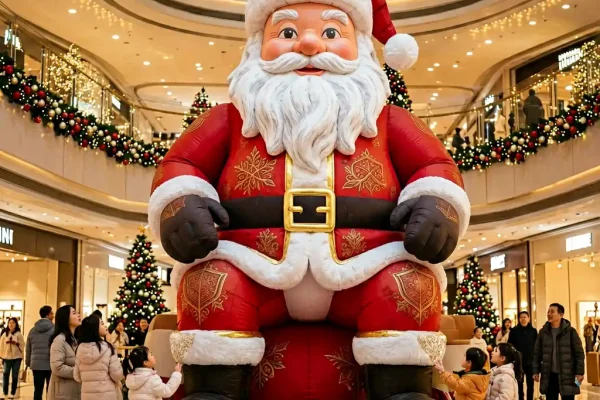
Giant Inflatable Holiday Decoration Sculpture

Gardens & Resorts
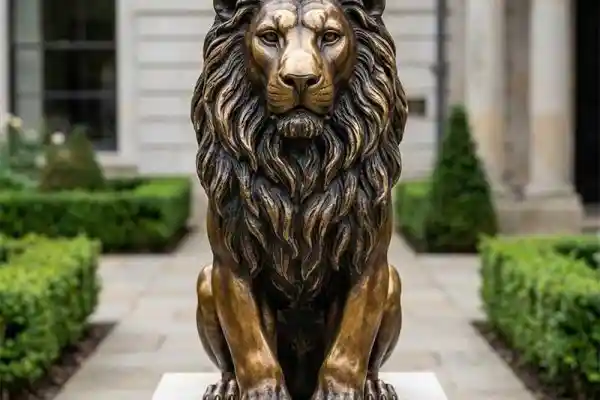
The “Regal Sentinel” Bronze Lion
Related Insights
Continue reading related articles
Brand Mascot & IP
Oct 13, 2026
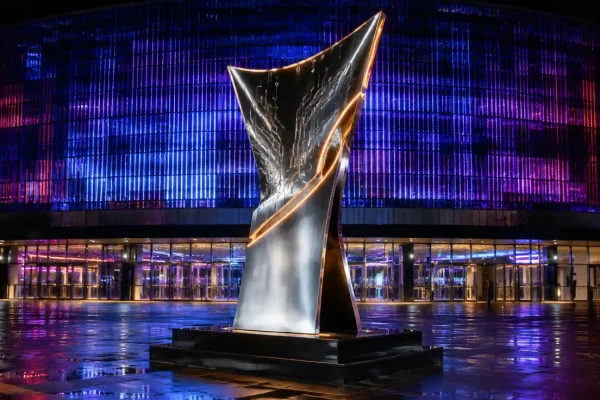
Esports Arena & Gaming Venue Sculpture: Landmarks, Trophies & Mascot Statues
Commercial & Hospitality
Oct 13, 2026
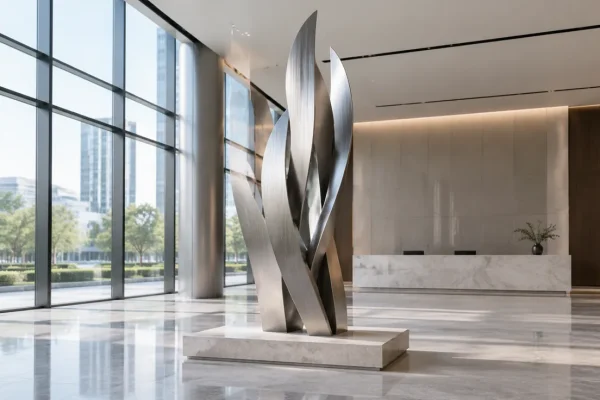
Corporate Lobby & Office Sculpture: Commissioning Guide for Developers

Custom Sculpture Insights & Guides
Oct 13, 2026
How Long Do Outdoor Sculptures Last? Material-by-Material Lifespan Guide
Our Sculpture Solutions
Explore our full range of custom sculpture services

IP Character Replication
Beyond 2D: Why IP Replication Drives Brand Engagement A character that lives only on a screen is easy to scroll...
Learn More →
Large Sculpture Custom
Engineering Monumental Scale A sculpture that stands 15 metres tall is not simply a 1.5-metre maquette scaled up ten times....
Learn More →
Original IP Development
From Concept to Icon Most sculpture enquiries begin with a reference: a licensed character, a film hero, an existing artwork...
Learn More →
Solutions Services
One Factory, Every Sculpture Material A sculpture brief rarely arrives pre-sorted by material. A client sends a reference image, a...
Learn More →
Custom Inflatables
Inflatable Sculptures as Brand Media Most sculptural commissions are permanent assets: they are built once, installed once, and admired for...
Learn More →
FRP & Fiberglass Sculpture Manufacturing
Custom FRP and fiberglass sculpture manufacturer - design, fabrication, and finishing.
Learn More →
Stainless Steel & Metal Sculpture Manufacturing
Custom stainless steel, bronze, corten, and aluminum sculpture manufacturer.
Learn More →
Theme Park Sculpture Services – Custom Amusement Park Statues
Custom Theme Park Sculptures – Bringing Imagination to Life Theme parks, amusement parks, zoos, and entertainment destinations thrive on immersive...
Learn More →
Commercial Sculpture Services – Custom Brand Mascots & Mall Art
Custom Commercial Sculptures – Elevate Your Brand & Space In today's competitive retail and commercial environment, first impressions matter. Commercial...
Learn More →