
Commercial & Hospitality
Hotel Lobby Sculpture Guide: First Impressions With Art
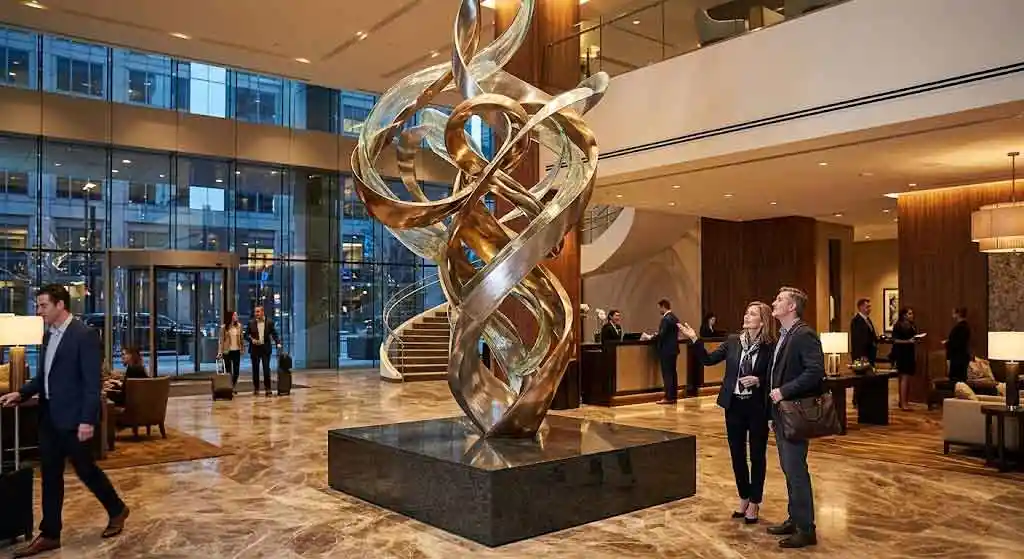
The hotel lobby is the stage upon which a guest’s entire stay is set. It is the first physical touchpoint after booking — the moment anticipation becomes reality. In luxury and lifestyle hospitality, that moment must be unforgettable. A custom lobby sculpture is one of the most effective ways to achieve it.
This guide explores the design principles, material choices, and brand-alignment strategies that underpin successful hotel lobby sculptures, with real examples from Y Sculptures’ portfolio. For a broader overview of art in commercial spaces, see our complete guide to commercial sculpture.
Why the Lobby Sculpture Matters
Guests form an impression of a hotel within the first seven seconds of entering the lobby. That impression influences every subsequent interaction — from front-desk satisfaction to likelihood of repeat booking. A well-designed sculpture anchors the visual identity of the space, communicates the hotel’s quality tier, and creates a natural focal point that guides movement from the entrance to the check-in area and beyond.
Moreover, lobby sculptures generate organic marketing value. In an era where guests photograph everything, a striking piece of art becomes a free advertising asset shared across Instagram, TikTok, and travel review platforms.
Lobby Design Principles for Sculpture Integratio
Spatial Zoning
The sculpture should define — not dominate — the lobby’s functional zones. Typically, the piece is positioned as a central anchor visible from the entrance, with clear sightlines from the reception desk, seating areas, and elevator banks. It must not obstruct pedestrian flow, particularly during peak check-in hours when luggage carts and groups converge.
Visual Hierarchy
In a lobby filled with furniture, lighting, signage, and architectural details, the sculpture must hold the top tier of visual interest without overwhelming the space. This is achieved through contrast — smooth against textured, tall against wide, light against dark. The sculpture should be the element the eye returns to.
Approachability
Unlike gallery art, a lobby sculpture must invite interaction. Guests should feel drawn to walk around it, examine it from different angles, and photograph it. Sharp, aggressive forms work against this; flowing curves, warm surfaces, and thoughtful proportions encourage engagement.
Scale Considerations
Scale is the most common mistake in hotel lobby sculpture design. An undersized piece gets lost in a double-height atrium; an oversized piece makes the space feel cramped and impedes front-desk operations.
As a general rule, a lobby sculpture’s height should be between one-third and two-thirds the height of the ceiling in the central lobby area. For a 6-metre ceiling, a sculpture between 2 and 4 metres tall is ideal. For grand lobbies with 10-metre-plus ceilings, multi-element suspended or floor-mounted compositions of 4–7 metres work well.
Horizontal spread matters too. The sculpture’s footprint should occupy no more than 15–20% of the lobby’s central floor area, leaving generous circulation space on all sides.
Material Selection for Indoor Sculptures
Indoor lobby sculptures benefit from materials that read as premium and are easy to maintain in a high-traffic environment.
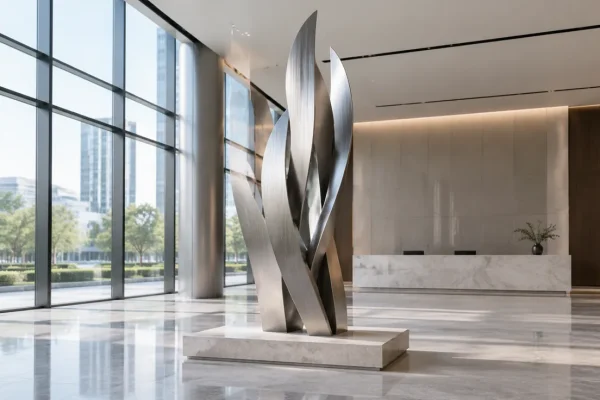
- Stainless Steel (mirror or satin finish): The most popular choice for contemporary hotel lobbies. Reflects light and surrounding architecture, creating a dynamic viewing experience as guests move through the space. Easy to clean and virtually indestructible in indoor use.
- Bronze with Patina: A classic choice for heritage and luxury properties. Bronze develops a rich, warm surface over time and communicates permanence and craftsmanship. Best paired with warm lighting and wood or stone interiors.
- Acrylic / Polycarbonate (illuminated): Ideal for modern, tech-forward hotels. Translucent materials integrated with LED lighting create ethereal, colour-shifting effects. Excellent for night-time impact and brand-colour integration.
- Fiberglass with Automotive Paint Finish: Allows complex organic shapes at a lower cost than metal. When finished with high-quality automotive paint, fibreglass can mimic the gloss and depth of metal or ceramic at a fraction of the weight — an important consideration for suspended installations. For a detailed breakdown of the FRP manufacturing process for large sculptures, including mould-making and finishing techniques, see our dedicated guide.
Lighting Integratio
Lighting can make or break a lobby sculpture. The same piece viewed under direct downlighting, warm uplighting, or colour-changing LEDs can read as three entirely different artworks.
Key lighting strategies include:
- Uplighting: Creates drama and emphasises height. Best for tall, vertical sculptures with interesting undersides or layered structure.
- Backlighting: Ideal for acrylic and translucent pieces. Creates a halo effect and makes the sculpture glow, particularly effective in evening hours.
- Accent Spotlights: Use adjustable track lighting to highlight specific features or textures. Essential for bronze pieces to bring out the depth of the patina.
- Integrated LEDs: The most seamless approach. Embed LEDs within hollow or translucent sculptures for self-illuminating pieces that shift colour or intensity throughout the day.
Always collaborate with your lighting designer and sculptor during the design phase — retrofitting lighting after installation yields inferior results.
Brand Alignment
A hotel lobby sculpture must feel native to the brand, not like a random art purchase. Our guide to hotel sculpture desig
explores how art enhances the guest experience. Start with the brand’s core values: Is the hotel rooted in heritage and tradition? A bronze abstract with a natural patina communicates timelessness. Is it a modern lifestyle brand targeting millennials and Gen Z? A colourful, illuminated piece with integrated technology reinforces innovation. We explore commercial sculpture applications in our dedicated guide: Commercial Sculptures: Boosting Brand Value Through Art (2026).
Colour palette, material finish, and form language should echo design elements already present in the property — the carpet pattern, the architectural curves, the brand logo’s geometry. The most successful lobby sculptures are those that feel inevitable — as though the space was built around them.
Featured Projects
The Flowing Dimensio
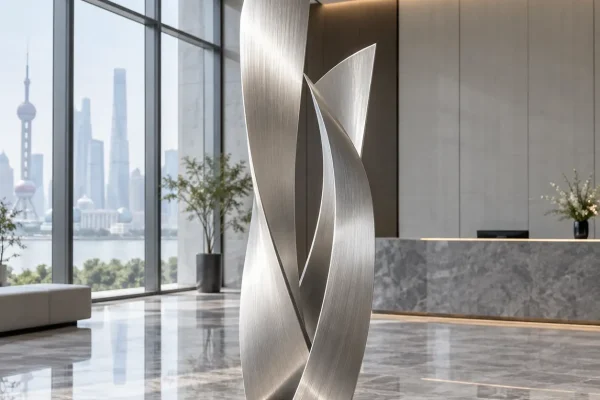
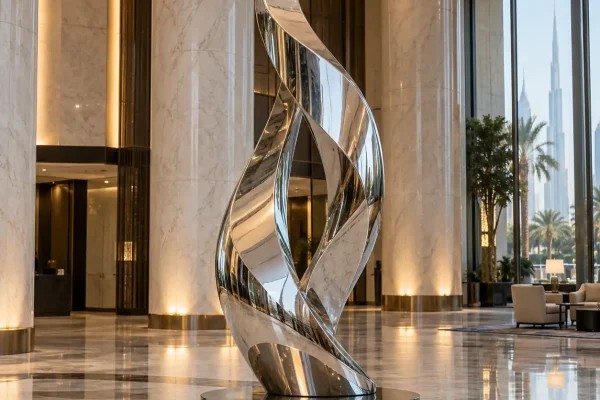
A polished stainless steel sculpture designed for a luxury hotel lobby. Its continuous, ribbon-like form creates fluid lines that draw the eye upward, emphasising the lobby’s soaring ceiling. The same design principles apply to luxury villa and private estate sculptures, where custom art transforms residential hospitality spaces. The mirror finish reflects and multiplies the surrounding space, making the lobby feel larger while creating an ever-changing visual experience as guests walk past. This piece exemplifies how abstract metalwork can anchor a contemporary hospitality environment without overwhelming it. For more on how sculptures enhance commercial and hospitality spaces, read Restaurant Sculpture Installation: Atmosphere, Branding & CX.
The Ethereal Node
Created for a high-end hospitality entrance, this sculpture combines illuminated acrylic elements with a brushed stainless steel core. The integration of warm LED lighting within translucent panels creates a soft, inviting glow that transitions from a bright, clean presence during the day to a warm, intimate beacon at night. The piece demonstrates how material combinations and lighting can be used to express a brand’s dual identity — professional and welcoming, modern and warm.
Conclusio
A custom hotel lobby sculpture is not a decoration — it is an investment in first impressions, brand identity, and guest experience. When evaluating material options, our material cost comparison guide helps hoteliers make informed budget decisions. By carefully considering scale, material, lighting, and brand alignment, hoteliers and designers can commission pieces that captivate guests from the moment they walk through the door and continue to generate value — social, emotional, and financial — for years to come.
Ready to create a signature piece for your hotel lobby? Contact Y Sculptures to begin the design conversation.
J
Written by James Liu
James Liu is Project Manager at Y Sculptures, specializing in end-to-end custom sculpture project delivery for commercial, hospitality, and public art sectors. With 12 years in the industry, James coordinates design approvals, material sourcing, fabrication timelines, international shipping logistics, and on-site installation. He has successfully delivered 500+ projects to 30+ countries.
Related Projects
Browse real projects matching this topic
Related Insights
Continue reading related articles
Brand Mascot & IP
Oct 13, 2026
Esports Arena & Gaming Venue Sculpture: Landmarks, Trophies & Mascot Statues
Commercial & Hospitality
Oct 13, 2026
Corporate Lobby & Office Sculpture: Commissioning Guide for Developers
Custom Sculpture Insights & Guides
Oct 13, 2026
How Long Do Outdoor Sculptures Last? Material-by-Material Lifespan Guide
Our Sculpture Solutions
Explore our full range of custom sculpture services

IP Character Replication
Beyond 2D: Why IP Replication Drives Brand Engagement A character that lives only on a screen is easy to scroll...
Learn More →
Large Sculpture Custom
Engineering Monumental Scale A sculpture that stands 15 metres tall is not simply a 1.5-metre maquette scaled up ten times....
Learn More →
Original IP Development
From Concept to Icon Most sculpture enquiries begin with a reference: a licensed character, a film hero, an existing artwork...
Learn More →
Solutions Services
One Factory, Every Sculpture Material A sculpture brief rarely arrives pre-sorted by material. A client sends a reference image, a...
Learn More →
Custom Inflatables
Inflatable Sculptures as Brand Media Most sculptural commissions are permanent assets: they are built once, installed once, and admired for...
Learn More →
FRP & Fiberglass Sculpture Manufacturing
Custom FRP and fiberglass sculpture manufacturer - design, fabrication, and finishing.
Learn More →
Stainless Steel & Metal Sculpture Manufacturing
Custom stainless steel, bronze, corten, and aluminum sculpture manufacturer.
Learn More →
Theme Park Sculpture Services – Custom Amusement Park Statues
Custom Theme Park Sculptures – Bringing Imagination to Life Theme parks, amusement parks, zoos, and entertainment destinations thrive on immersive...
Learn More →
Commercial Sculpture Services – Custom Brand Mascots & Mall Art
Custom Commercial Sculptures – Elevate Your Brand & Space In today's competitive retail and commercial environment, first impressions matter. Commercial...
Learn More →