
Custom Sculpture Insights & Guides
FRP Manufacturing Process for Large Sculptures: Step by Step
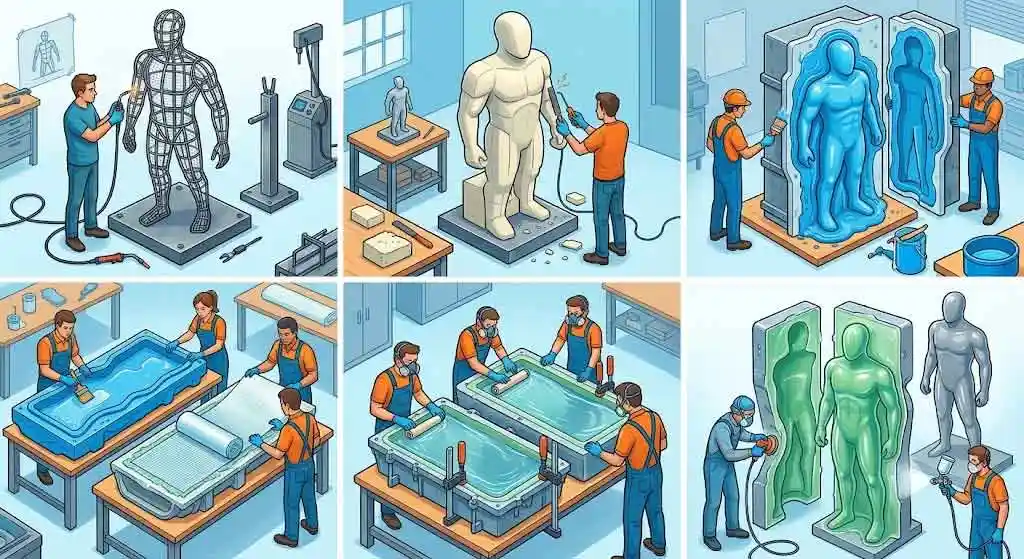
Fiberglass Reinforced Plastic (FRP) has become the material of choice for large-scale sculptures across public plazas, corporate headquarters, museums, and water parks, and other venues. Its combination of light weight, corrosion resistance, and design freedom makes it uniquely suited for monumental works that would be prohibitively expensive or structurally impossible in traditional materials. At Y Sculptures, our 50+ engineers and artists have refined every stage of the FRP manufacturing process over thousands of projects. This guide walks through each step, from initial design to final painting, and explains the material science that determines a sculpture’s longevity and visual quality.
Step 1: Design & Engineering (1–3 Weeks)
Every large FRP sculpture begins as a conceptual design. Our team works with clients to develop 3D digital models using Rhino 3D, ZBrush, and SolidWorks — tools that allow us to simulate structural loads, wind resistance, and material distribution before any physical work begins. During this phase, the sculpture is divided into manageable sections (typically 2–4 meters in maximum dimension) to accommodate mold fabrication, transportation, and on-site assembly. A steel or aluminum internal armature is designed in parallel to provide the primary load-bearing skeleton that the FRP laminate will wrap around. For a complete framework on vendor selection and sculpture procurement best practices, our comprehensive buyer’s guide covers RFQ writing and supplier evaluation.
Step 2: Mold Making (2–4 Weeks)
Once the design is finalized, a master pattern is fabricated — usually from clay, foam, or CNC-machined polyurethane board. This pattern is an exact replica of the final sculpture. From this pattern, a production mold is created. For large sculptures, we typically use fiberglass-reinforced mother molds with silicone or epoxy gelcoat interiors. The mold is cut into sections that can be demolded individually, then reassembled for lamination. Quality at this stage is critical: every seam, texture, and surface detail on the mold transfers directly to the finished FRP part.
Step 3: Material Selection — Choosing the Right Resi
The choice of resin system determines the mechanical properties, durability, and cost of the finished sculpture. Three main types are used in large-scale sculpture work:
| Resin Type | Key Properties | Best For | Relative Cost |
|---|---|---|---|
| Polyester Resi |
Good strength, moderate UV resistance, fast cure times, low cost | Indoor sculptures, temporary installations, budget-conscious projects | $ (baseline) |
| Epoxy Resi |
Superior adhesion, excellent mechanical strength, low shrinkage, high UV resistance with proper additives | Outdoor monumental sculptures, marine environments, high-detail surfaces | $$$ (3–5× polyester) |
| Vinyl Ester Resi |
Excellent chemical and corrosion resistance, superior fatigue life, good heat tolerance | Water features, chemically aggressive environments, high-stress structural zones | $$ (1.5–2× polyester) |
For most large outdoor sculptures, Y Sculptures specifies a vinyl ester or epoxy system for the outer structural layers, backed by a polyester tooling gelcoat for the cosmetic surface. This hybrid approach balances performance and budget. For a broader material cost compariso
across FRP, stainless steel, and bronze, our detailed cost analysis breaks down the numbers per cubic meter.
Step 4: Hand Lay-Up & Lamination (2–6 Weeks)
The most labor-intensive stage, hand lay-up involves placing layers of fiberglass reinforcement (chopped strand mat, woven roving, or biaxial fabric) into the mold, each saturated with catalyzed resin. Large sculptures may require 8 to 15 laminate layers, with fiber orientation engineered to match stress vectors. For engineers evaluating fabrication methods, our detailed steel vs FRP compariso
examines both approaches side by side. Core materials such as PVC foam or balsa wood are often integrated between laminate layers to increase stiffness without adding weight. Special attention is given to edge transitions, inside corners, and attachment points for the internal armature. The Aetheria digital avatar project exemplifies the precision required at this stage, where complex organic curves demanded highly skilled hand finishing.
Step 5: Curing & Demolding (1–2 Weeks)
After lamination, the part must cure at a controlled temperature (typically 20–30°C) for 24–72 hours, depending on resin chemistry and ambient conditions. For accelerated production, parts may be post-cured in an oven at 60–80°C to achieve full cross-linking and maximize mechanical properties. Once cured, sections are carefully demolded and moved to the finishing shop. Incomplete curing is one of the most common quality failures in FRP fabrication — it leads to warping, poor paint adhesion, and long-term degradation.
Step 6: Trimming, Assembly & Surface Finishing (2–4 Weeks)
Demolded sections have excess flash material trimmed away using diamond blades or abrasive cutters. The sections are then trial-fitted and bonded together using structural epoxy adhesives and additional laminate overlays on the interior seams. The assembled sculpture undergoes extensive surface preparation: pinholes are filled with body filler, seams are sanded smooth, and the entire surface is block-sanded progressively through 80, 120, 220, and 400 grit. For sculptures requiring ultra-smooth finishes like The Flowing Dimensio
, additional high-build primer coats are applied and re-sanded between coats.
Step 7: Priming & Painting (1–3 Weeks)
The painting process begins with a two-part epoxy primer that seals the FRP surface and provides a uniform substrate. For outdoor sculptures, we apply an automotive-grade polyurethane topcoat with UV stabilizers — this is the same coating technology used on aircraft and luxury yachts, offering 8–15 years of outdoor durability. Airless spray equipment is used for large uniform areas, while detail work is done with HVLP spray guns and hand brushing. Multi-color sculptures are masked and painted in layers, with each color baked at 60°C for 30 minutes to accelerate curing and improve hardness. We walk through the complete fabrication process in our manufacturing guide: How Custom Sculptures Are Made: From Concept to Installation in 10 Steps.
Quality Factors That Define a Superior FRP Sculpture
- Resin-to-glass ratio: Consistent 30:70 by weight ensures strength without brittleness or excess weight.
- Gelcoat thickness: 0.5–0.8 mm minimum for adequate UV protection without cracking.
- Laminate compaction: Roller-debulking every 2–3 layers eliminates voids and dry spots.
- Curvature continuity: No flat spots or abrupt transitions — every surface should flow smoothly into the next.
- Paint adhesion testing: Cross-hatch tape testing per ASTM D3359 on every color coat.
Timeline Estimates for Large FRP Sculptures
| Sculpture Scale | Typical Timeline | Example Dimensions |
|---|---|---|
| Small–Medium | 8–12 weeks | 1–3 m height |
| Large | 12–20 weeks | 3–8 m height |
| Monumental | 20–40 weeks | 8–20+ m height |
Conclusio
FRP manufacturing for large sculptures is a sophisticated process that demands expertise in materials science, structural engineering, and fine-art craftsmanship. Each step — from design through to final paint — directly affects the sculpture’s appearance, durability, and structural integrity. When sourcing a manufacturer, look for demonstrated competence across all seven stages, not just mold-making or painting alone. At Y Sculptures, our integrated team of engineers, mold makers, laminators, and master painters controls every variable in the process, delivering large-scale FRP sculptures that stand the test of time and the elements. For more detail on the production and engineering stages, read Custom Sculpture Manufacturing: 7-Step Process Guide.
D
Written by David Chen
David Chen is Design Director at Y Sculptures with 18+ years in large-scale sculpture design and fabrication. He specializes in FRP, stainless steel, and bronze sculpture engineering, overseeing design-to-production workflows for theme park attractions, public art installations, and brand IP mascots. David has personally directed over 300 custom sculpture projects for clients across 20+ countries.
Related Projects
Browse real projects matching this topic
Inflatable Sculpture
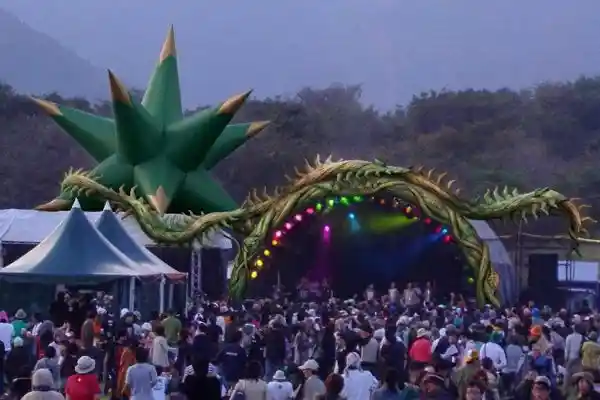
Eco-Pulse Music Festival Integration – “Biophilic Harmony” Stage Installation
Inflatable Sculpture
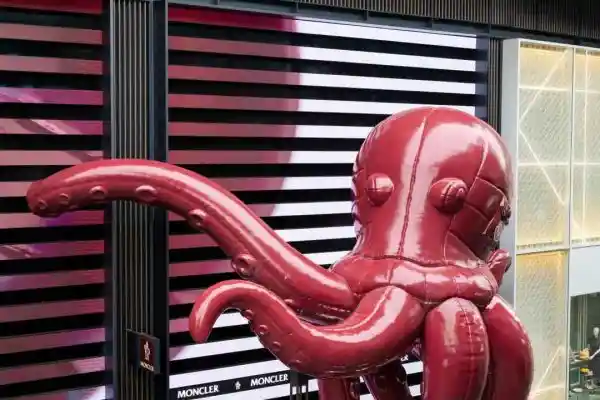
Giant Inflatable Octopus Art Installation
Inflatable Sculpture
Custom Inflatable Arch Entrance Sculpture
Inflatable Sculpture
“The Abyssal Guardian” Inflatable Art Installation
Related Insights
Continue reading related articles
Brand Mascot & IP
Oct 13, 2026
Esports Arena & Gaming Venue Sculpture: Landmarks, Trophies & Mascot Statues
Commercial & Hospitality
Oct 13, 2026
Corporate Lobby & Office Sculpture: Commissioning Guide for Developers
Custom Sculpture Insights & Guides
Oct 13, 2026
How Long Do Outdoor Sculptures Last? Material-by-Material Lifespan Guide
Our Sculpture Solutions
Explore our full range of custom sculpture services

IP Character Replication
Beyond 2D: Why IP Replication Drives Brand Engagement A character that lives only on a screen is easy to scroll...
Learn More →
Large Sculpture Custom
Engineering Monumental Scale A sculpture that stands 15 metres tall is not simply a 1.5-metre maquette scaled up ten times....
Learn More →
Original IP Development
From Concept to Icon Most sculpture enquiries begin with a reference: a licensed character, a film hero, an existing artwork...
Learn More →
Solutions Services
One Factory, Every Sculpture Material A sculpture brief rarely arrives pre-sorted by material. A client sends a reference image, a...
Learn More →
Custom Inflatables
Inflatable Sculptures as Brand Media Most sculptural commissions are permanent assets: they are built once, installed once, and admired for...
Learn More →
FRP & Fiberglass Sculpture Manufacturing
Custom FRP and fiberglass sculpture manufacturer - design, fabrication, and finishing.
Learn More →
Stainless Steel & Metal Sculpture Manufacturing
Custom stainless steel, bronze, corten, and aluminum sculpture manufacturer.
Learn More →
Theme Park Sculpture Services – Custom Amusement Park Statues
Custom Theme Park Sculptures – Bringing Imagination to Life Theme parks, amusement parks, zoos, and entertainment destinations thrive on immersive...
Learn More →
Commercial Sculpture Services – Custom Brand Mascots & Mall Art
Custom Commercial Sculptures – Elevate Your Brand & Space In today's competitive retail and commercial environment, first impressions matter. Commercial...
Learn More →