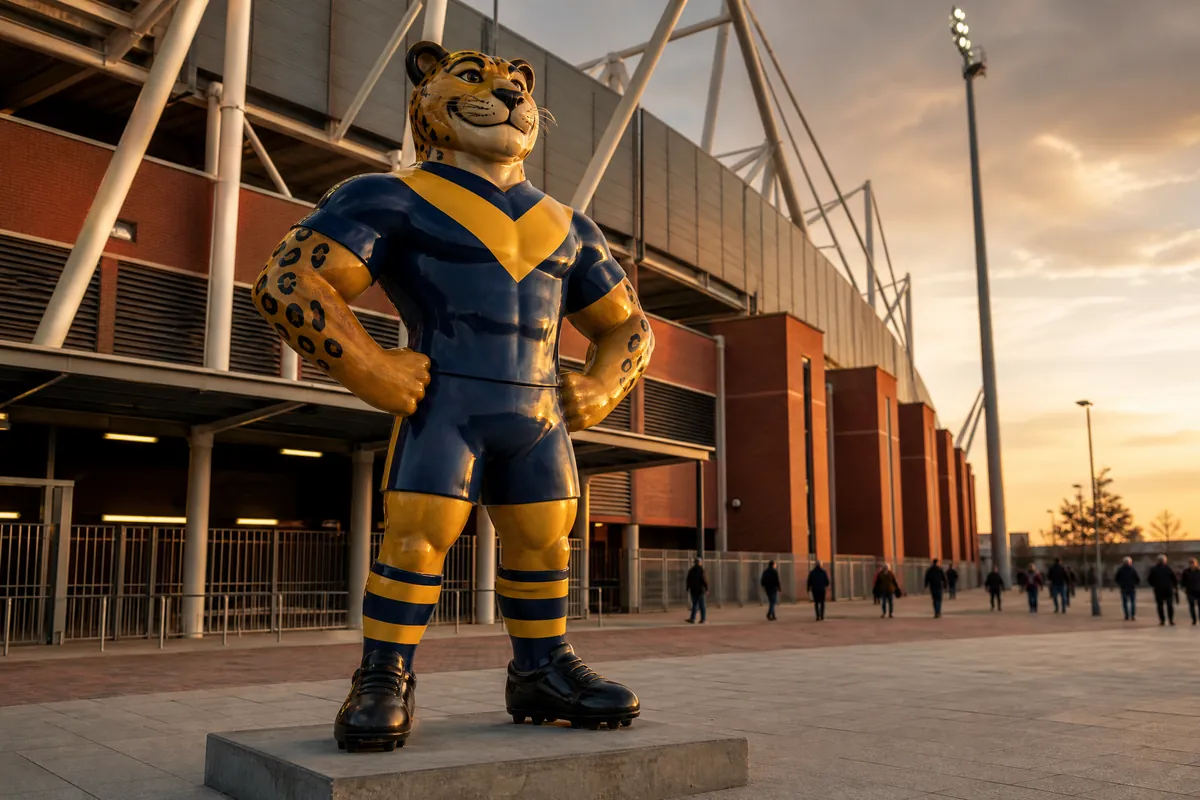
“Home Ground” — Giant FRP Stadium Concourse Mascot Statue
Commercial
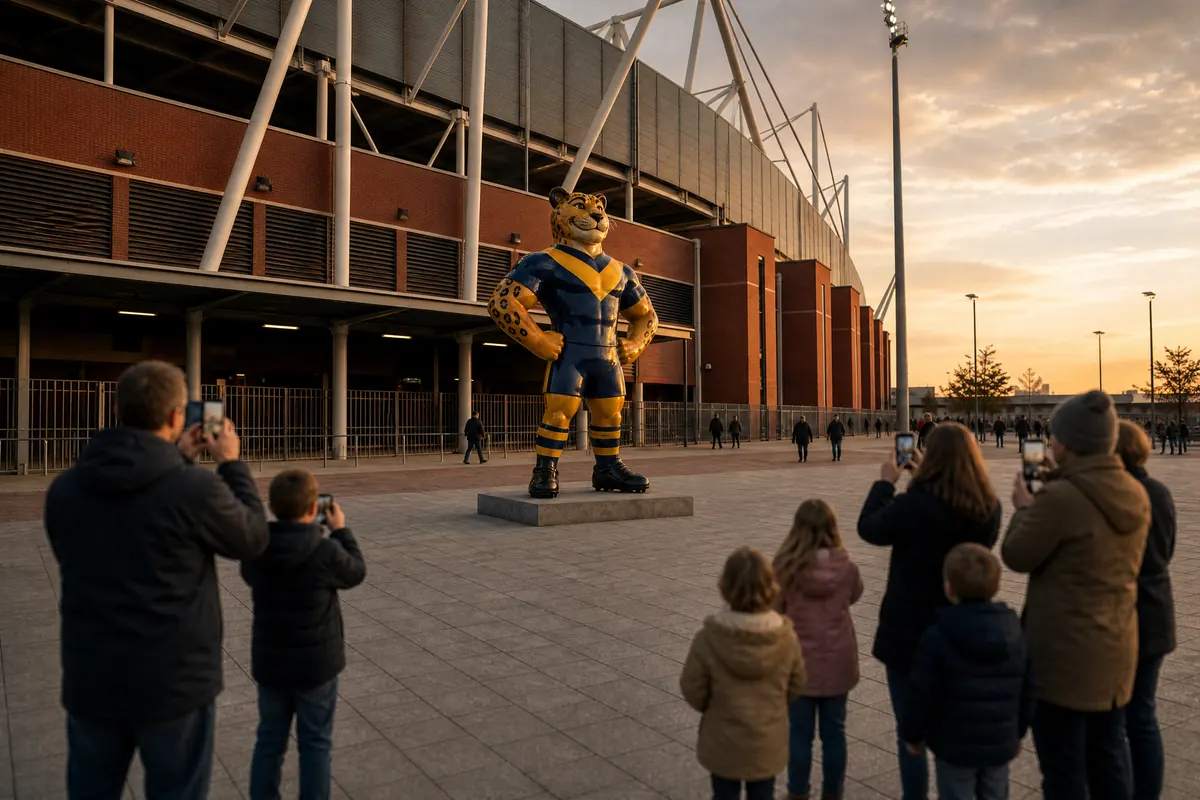
Sports venues have a structural problem that mascots solve and architecture does not: a stadium looks identical from the outside whether the team is playing or not. A club in a dense urban market wanted a single oversized figure on its concourse plaza that fans would treat as the meeting point — and that would still look sharp on a broadcast wide shot.
1. Project Background
The plaza outside the main turnstiles is the busiest surface on the site. On match days it handles tens of thousands of people in the two hours before kick-off; on non-match days it is a public thoroughfare. Anything placed there has to tolerate crowds leaning on it, children climbing the base, and full sun exposure in summer followed by hard frost in winter.
The club supplied its mascot style guide — proportions, team colours and the character’s standard pose — and asked us to enlarge it to five metres without losing the shape language that makes it recognisable at a distance.
2. The Design Brief
- Survive contact. The base had to invite sitting but resist being used as a climbing frame above waist height.
- Hold colour outdoors. Team colours are brand assets; fading or chalking is not acceptable within a few seasons.
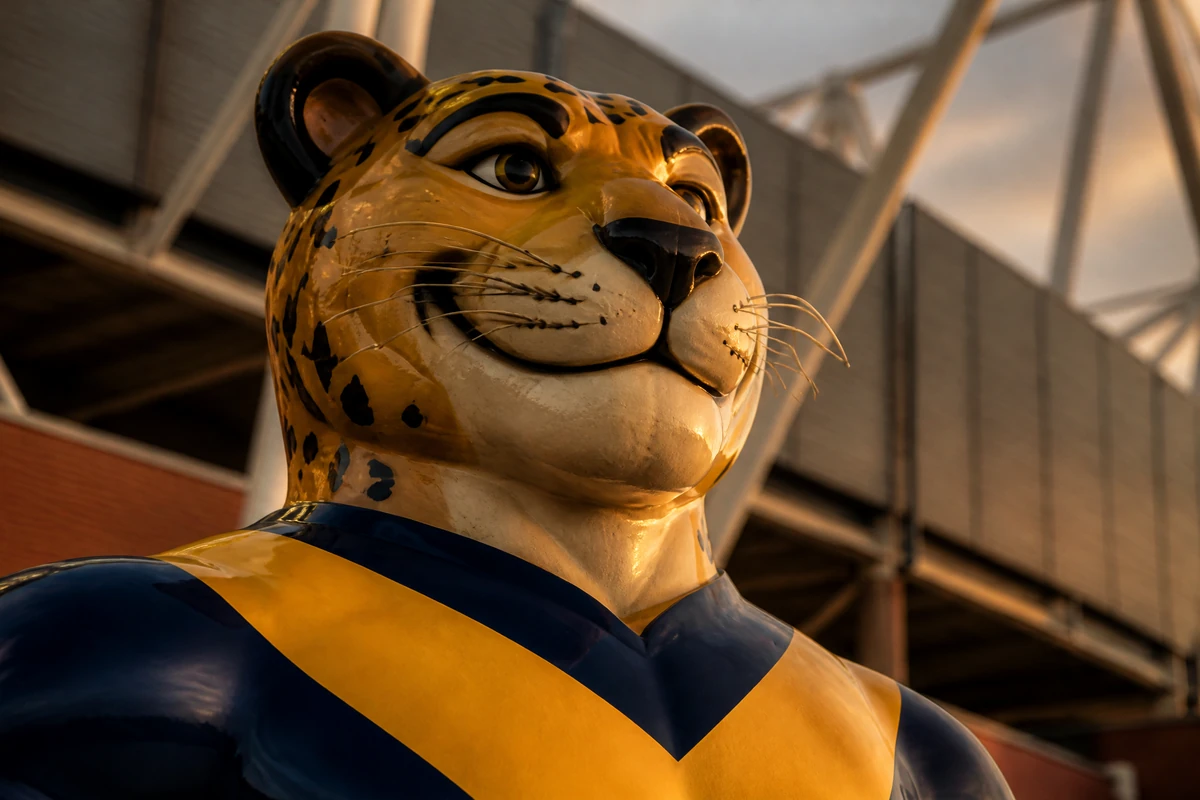
- Photograph well from every angle. The figure is the backdrop for fan photos, so silhouette and surface gloss both matter.
3. Design Development & Engineering
Enlarging a character is not a straight scale-up. At five metres the head dominates every sightline, so the cranium was reduced slightly relative to the source artwork and the chest and shoulders widened to carry the mass. The pose was also adjusted: an upright, hands-on-hips stance gives the figure a stable footprint and reads clearly from the far side of the plaza.
The shell is hand-laid over a CNC-cut pattern, with a steel frame bonded inside running from the plinth to the shoulders. That is the same large-scale fibreglass character work we do for wildlife and brand figures, and the rule that matters here is stiffness: a figure this size will flex visibly in gusty conditions unless the internal frame is sized from a wind-load calculation rather than by eye.
4. Materials & Fabrication
The outer skin is a hand-laid laminate with a UV-stable gel coat, so the base colour resists chalking even where the sun hits it all day. Team colours are finished in automotive-grade polyurethane, sprayed in a booth and cut in with masked hard edges.
Everything guests touch was designed around the outdoor maintenance routine the club’s facilities team already runs: no upward-facing ledges that collect water, no recessed grooves narrower than a brush, and a bolt-down plinth cap that lifts off for inspection of the frame. A nearby sports commission, our basketball mascot statue, uses the same construction and the same base detailing.
5. Installation
The figure shipped in two halves and was bonded and finished on site over four days. The plinth is a cast concrete ring with a bolted cap, set into the plaza paving so the sculpture reads as part of the ground plane. The club’s operations team received a written inspection schedule covering the frame bolts, gel-coat scuffs and paint touch-up codes.
6. What This Project Shows
Sports venues buy mascot figures for three jobs at once: wayfinding, fan photography and broadcast identity. Getting all three usually means treating the base and the engineering as part of the design rather than as a plinth chosen at the end.
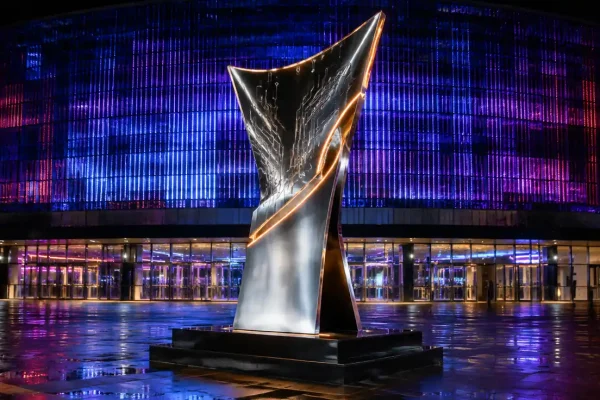
The stadium case is a good companion to a venue landmark inside the bowl — see our illuminated esports arena trophy sculpture for a version of that pairing where the interior piece carries the broadcast frame and the exterior mascot carries the fan zone.
Project Gallery