“Vintner’s Crown” — Bronze Sculpture for a Winery Estate
Gardens & Resorts
Cellar-door hospitality has changed what estates need from their grounds. Visitors now arrive expecting somewhere to walk, photograph and linger before the tasting — and a working vineyard row is a hard place to put anything fragile. This estate wanted one bronze piece at the head of its oldest block that would read as a family crest rather than as decoration.
1. Project Background
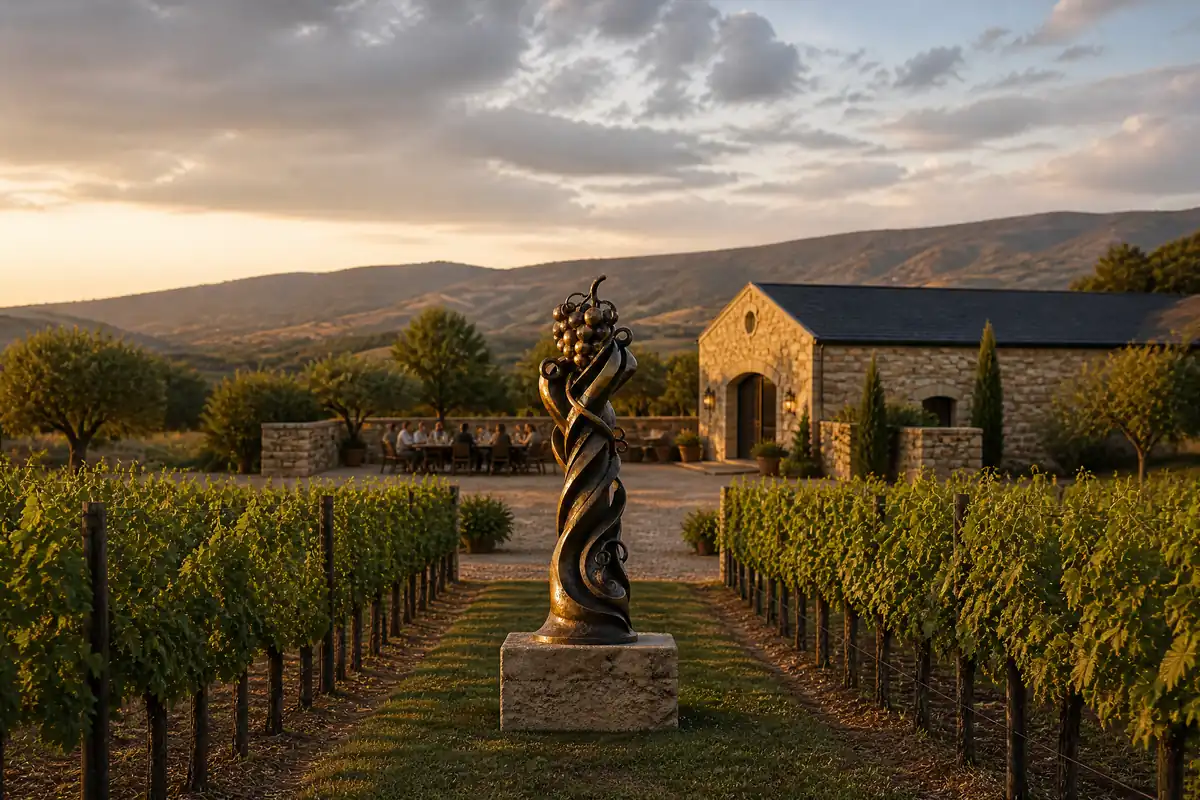
The estate sits on a south-facing slope with three generations of plantings, and the client was specific about placement: the sculpture had to stand at the end of the oldest vine row, on the axis guests walk from the car park down to the cellar door. That position is fully exposed — no shade, no windbreak, and irrigation runoff across the ground in winter.
Two constraints came with the spot. The piece had to tolerate being brushed by tractor implements at harvest, and it had to read clearly from roughly 40 metres, because that is where guests first see it.
2. The Design Brief
Three requirements shaped every decision:
- Belong to the site. The form had to read as vine and fruit without turning into a literal signpost.
- Outlast the plantings. The client wanted a material that improves with age instead of needing repainting every few seasons.
- Be touchable. Guests lean on and photograph whatever ends a row, so no thin unsupported sections and no sharp crown detail.
3. Design Development & Engineering
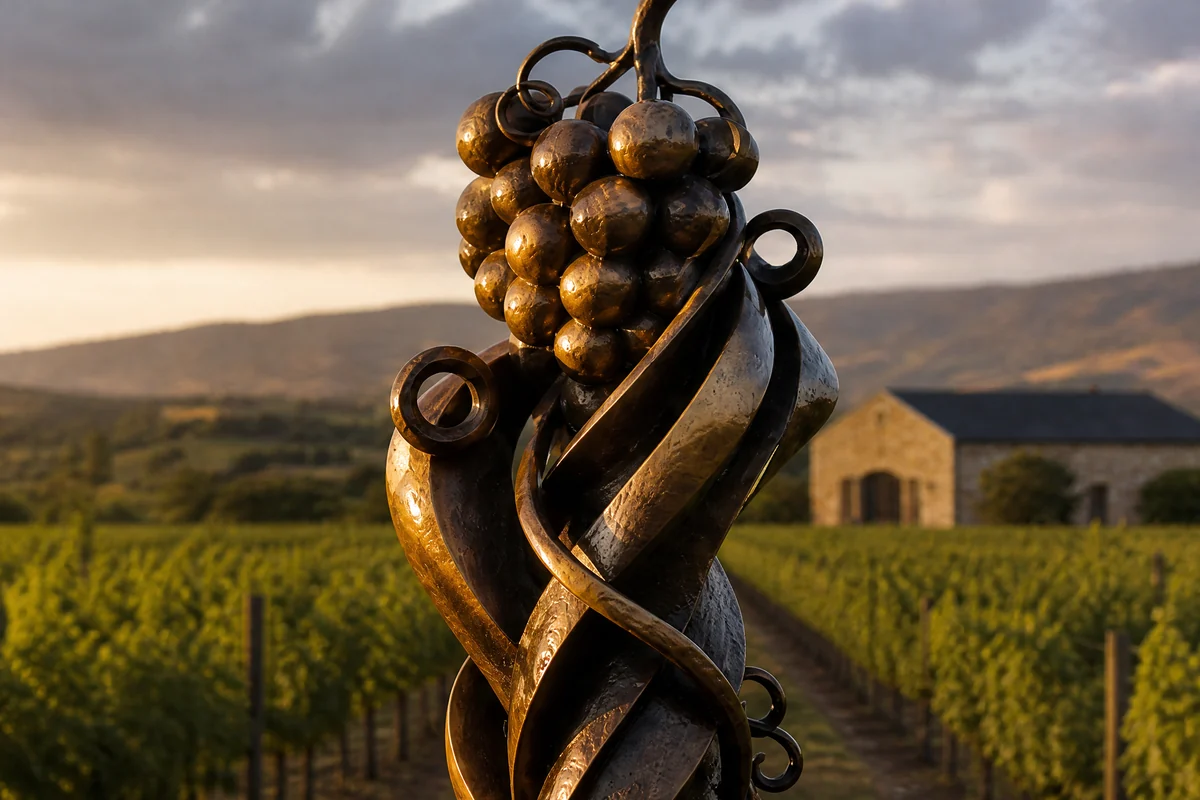
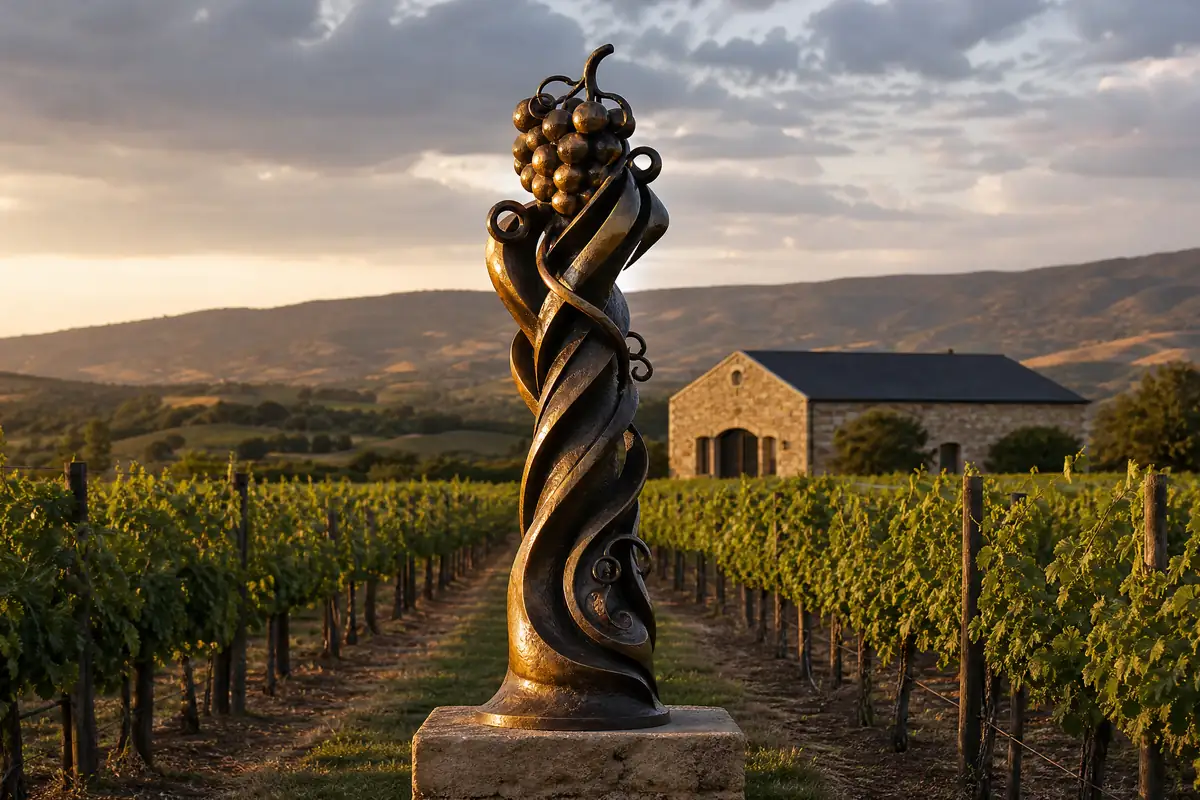
The finished form stacks coiled tendril ribbons into a loose column, crowned by a cluster of stylised grapes. It is cast in sections and welded from the inside, so no external seam interrupts the surface. The cluster is deliberately hollow, which keeps the head light enough that the base can stay compact — important when the client does not want a concrete pad cut into a vineyard.
An internal stainless armature runs the full height and ties into a buried footing set below the root zone, so nothing protrudes into the cultivation line. The tendrils were modelled at 1:4 first and drawn as a set of cored sections before any wax pattern was cut.
4. Materials & Fabrication
Silicon bronze was chosen over brass for its working colour and its tolerance of coastal-to-continental swings in humidity. The casting followed the same lost-wax casting route we use for any figurative bronze: wax pattern, ceramic shell, burnout, pour, then chasing and weld dressing.
Patination was applied hot and stopped by hand in five passes to get an even brown that keeps a warm mid-tone rather than going flat black in shade. A microcrystalline wax seal slows the natural darkening and gives staff something simple to renew — the same routine covered in our outdoor sculpture maintenance guide.
5. Installation
The piece shipped in three bolted sections. The footing was cast six weeks ahead of delivery using a template ring we supplied, which let the estate’s own contractor work between harvest operations. Setting the base, aligning the armature and torquing the flange bolts took two days, and the client’s grounds team took over the wax renewal schedule at handover.
6. What This Project Shows
Wineries, breweries and estates usually approach us for a landmark first and a mascot second, and bronze suits that order well: it is the material that ages into the site rather than fighting it. Placement inside a working landscape is the harder problem — the piece has to sit in the cultivation system without blocking it.
For an estate that is curating a wider trail of pieces, the planning logic is close to villa and estate art curation, and a garden-scale commission such as a corten steel garden pavilion will often cost less per viewing metre than a single bronze and spread visitor attention further.
Project Gallery