
“Majestic Giraffe” — Hand-Cast Bronze Giraffe Garden Sculpture
Gardens & Resorts
1. Project Background
The Majestic Giraffe is a hand-cast bronze giraffe sculpture commissioned for a luxury private estate in Tuscany, Italy. Designed to serve as the centerpiece of a formal Italian garden, this 2.8-meter sculpture captures the quiet dignity of a giraffe at rest, its long neck reaching gracefully above manicured hedges and lavender borders.
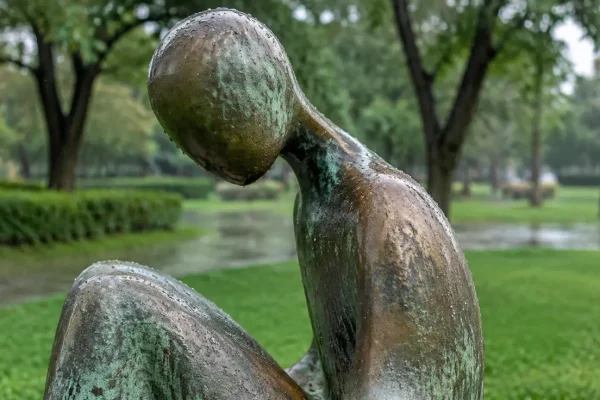
Cast using the traditional lost-wax method, each piece is individually finished with a custom verdigris patina that deepens naturally over time, making every sculpture unique.
2. Key Features
- Material: Premium bronze (CuSn12), lost-wax casting process
- Finish: Hand-applied verdigris patina with wax sealant
- Height: 2.8 meters (9.2 ft) — life-scale with elevated neck
- Base: Reinforced bronze plate with ground anchor system
- Weight: Approximately 450 kg, wind-resistant
- Weathering: Designed for permanent outdoor installation, patina improves with age
3. Design Details
The giraffe stands in a relaxed alert pose — ears slightly forward, tail gently curved. The surface texture transitions from smooth polished areas on the face and ossicones to a stippled, organic finish on the body, mimicking the animal’s natural coat pattern. Life-size anatomical proportions were verified against reference photography from African wildlife reserves.
4. Customization Options
- Patina color: Verdigris green / dark bronze / golden brown / custom match
- Scale: Available from 1.5m to 4m height
- Base style: Natural rock / polished plinth / recessed ground mount
- Pose: Alert standing / grazing / walking
- Pairing: Available as a set with matching bronze acacia tree or baby giraffe
5. Installation & Maintenance
Each bronze sculpture ships with a pre-drilled base plate and stainless steel ground anchors. A team of two can install within 4 hours using standard concrete foundation preparation. Annual wax reapplication maintains patina luster. The bronze alloy is guaranteed against structural defects for 15 years.
Lost-Wax Casting at This Scale
A 2.8-metre giraffe at 450kg is a substantial bronze casting, and the lost-wax process is what makes the form possible. Modelled in wax in sections, it is burnt out and cast in CuSn12 — a route that captures the musculature and the surface detail of a full animal in a way that a fabricated or welded piece could not match at this size.
At 450kg the casting is handled and moved as a single rigid body, which means the internal structure and the lifting points are engineered into the design. The neck is the structurally demanding part — it is the longest unsupported span and the part most exposed to wind, so it carries additional reinforcement that is not visible from outside.
The Verdigris Patina
The verdigris patina was a specific request and it is a live surface rather than a fixed finish. Applied by hand in layers, it continues to develop for months after installation, deepening in the recesses and settling more on the exposed planes. Each piece ends different, which is part of why the same sculpt is never duplicated identically.
A patina of this type is more demanding to maintain than a polished bronze. It should be washed annually and not allowed to dry on the surface, and it needs a wax or sealant renewed periodically. For an estate piece, the honest advice is that this is a low-effort but non-zero maintenance commitment, and we say so at the point of commission rather than after installation.
Siting in a Formal Italian Garden
In a formal Tuscan garden, the piece is a focal point and the siting determines the whole composition. The long neck has to be positioned so the silhouette reads against sky or hedging rather than overlapping a building line, and the two-week installation allowance in the schedule covers the crane work and the final positioning that a piece at this weight requires.
We recommend establishing the position against the garden’s completed planting, because a formal layout means the hedge and the lavender borders are part of what the sculpture is seen against — and those change over the first seasons as the garden matures.
Foundation & Wind Loading
At 2.8m and 450kg the piece is not simply heavy, it is a sail. A large bronze mass high on a narrow base will experience significant uplift, so the foundation is an engineered concrete mass sized for overturning rather than for weight alone.
On Tuscan terrain the ground conditions vary and a full structural design is normally required rather than an assumed detail. That assessment is part of the technical design phase, and it is worth resolving before the patina is applied, because a change of position after finishing is expensive.
Ongoing Care
Quarterly washing with fresh water, an annual check of the patina, and a periodic sealant renewal — that is the working maintenance schedule, and it is more than a polished bronze would require. The foundation should be inspected annually for movement, particularly in the first two seasons after installation as the ground settles.
Project Gallery